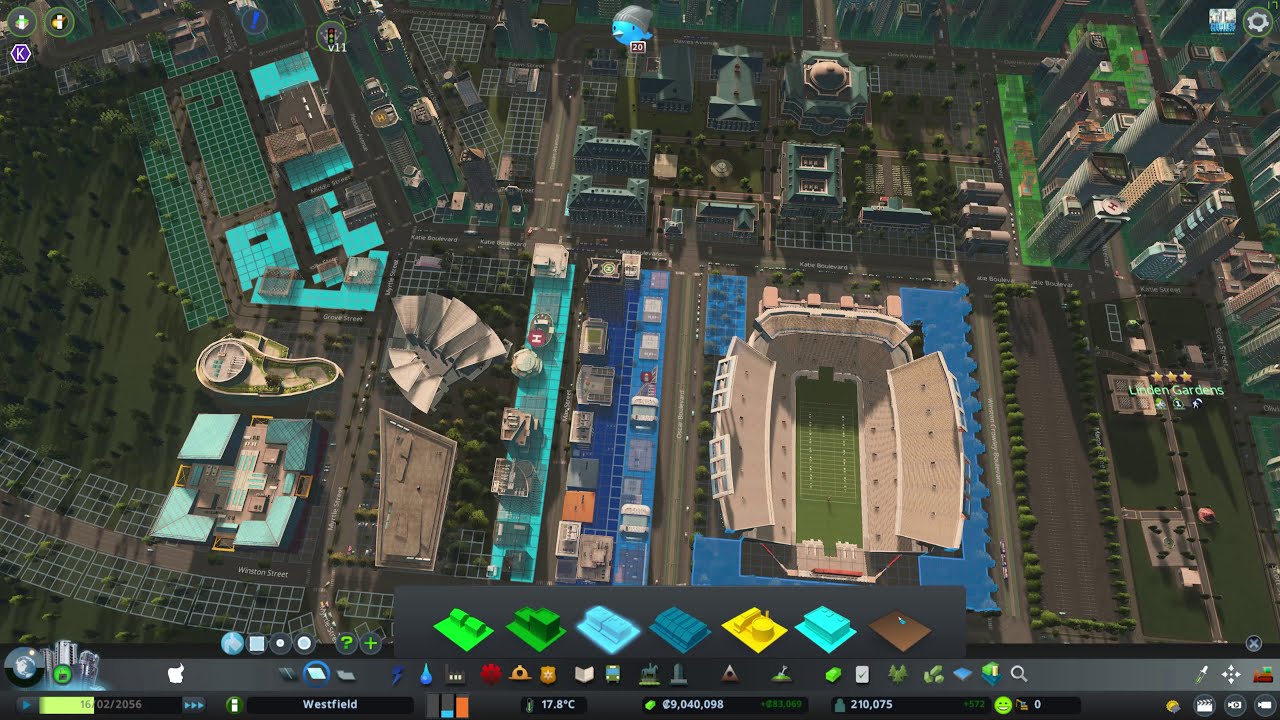
Westfield starts on the Wolf Creek map with cheap two-lane gravel roads, a corridor kept free for a future highway, water pipes laid along the streets like a real city, a recycling centre instead of a landfill, a first small roundabout, and districts unlocked at 1,000 citizens so the first farmland can go in.
What happens in this episode
After a few videos about map creation and Google Maps overlays, it was time to play. Westfield starts on a map called Wolf Creek, and this first episode explains why I do things the way I do while laying out a new city.
How it was built
Gravel roads and a free corridor
The first road unlocked a few more, including my favourite starter road: the two-lane gravel road. It’s cheap and more than enough at the beginning. The only outside connection is a highway, and I want it to run through the whole city later, so that corridor stays free of anything I would have to demolish.
Power, water and pipes under the streets
I hate coal power plants for their pollution, in SimCity and here, but at this stage there’s no real alternative. The water pump and the “eco” water outlet go down by the river. The water pipes follow the roads, because real cities supply homes from a main line under the street, not across the backyards.
Zones and the industry problem
Commercial zones line the main street, with small shopping squares between the homes, because people like shops within walking distance. Then came the usual early-game problem: rising industrial demand. A little industry went in so people had jobs, but the long-term plan for that area is farmland.
Little Hamlet
At Little Hamlet the city was making a small profit. For waste I prefer a recycling centre over a landfill: the landfill is cheaper but only causes trouble later. Clinics and an elementary school followed.
A first roundabout
The traffic overlay showed a busier crossing downtown, so a small roundabout went in. People like roundabouts in Cities: Skylines, and they help. Buildings too close to a roundabout are never good, so I de-zoned around it. Four squares of distance are usually enough.
1,000 citizens: farmland
At Worthy Village (1,000 citizens) districts unlocked, along with police, fire and specialisations. The first agricultural district was painted, with room left for the dedicated farm buildings that come at 1,500 citizens. Farming pollutes far less than heavy industry. The forest around the town stays: I’ll build around it. Residential demand was high by the end, which leads into episode 2.
Video chapters
- 00:00Wolf Creek and the gravel-road trick
- 03:20Keeping room for a future highway
- 09:51Coal power, water and pipes along the roads
- 13:01First zones and early industrial demand
- 20:02Little Hamlet: waste, clinics and schools
- 27:01A small roundabout
- 30:351,000 citizens: districts and farmland
- 38:37What comes next
Clicking a chapter starts the video above at that point.
FAQ
Which road is best at the start of Cities: Skylines?
I like the two-lane gravel road. It saves a lot of money and is more than enough for the first streets. In my game it only became available after placing the first piece of road.
Why lay water pipes along the roads?
Real cities run water and power under the streets, not under houses. A simple grid across the homes works in the game, but following the roads is more realistic and easier to change later.
When can you create districts and farmland?
Districts and area specialisations unlock at 1,000 citizens (Worthy Village). That's when I painted the first agricultural area.