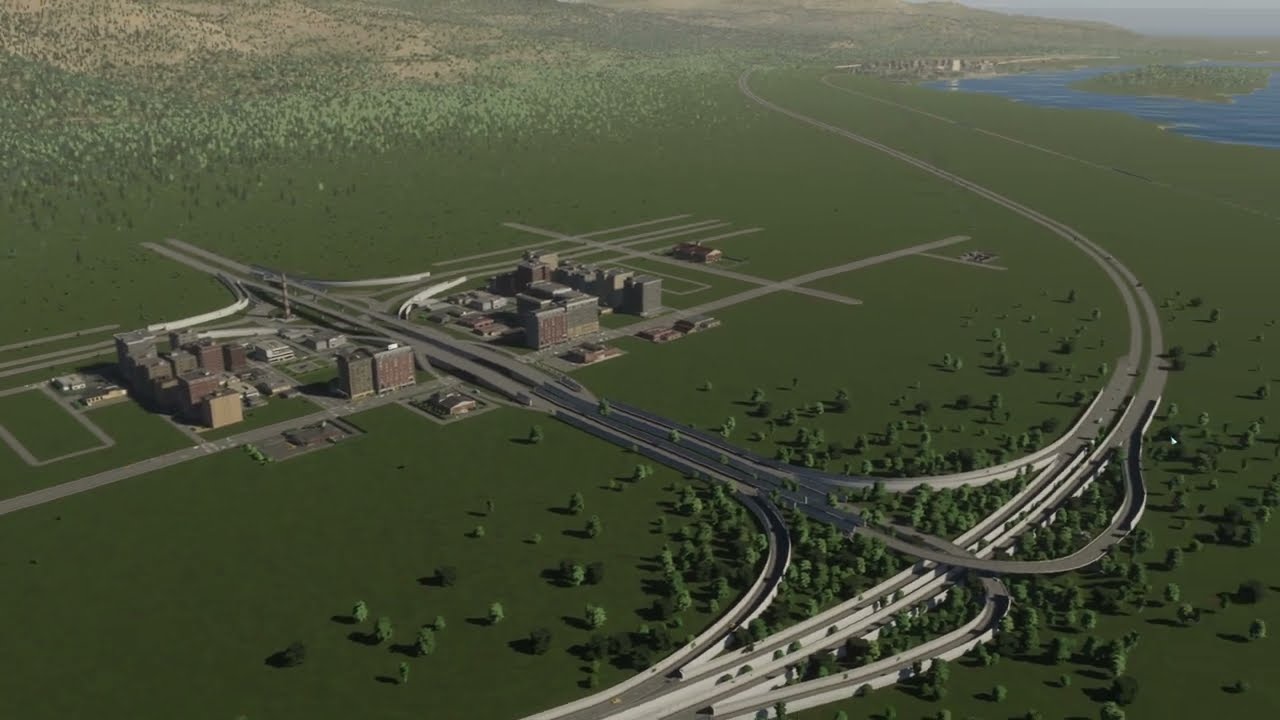
The new city gets its central station: the rail line is rerouted for space, a regular station is upgraded with every option and combined with a rail yard trimmed down with a bulldozer tool, parking gets more expensive the closer it is to the platforms, and Autumn Bluff and Birdsong Gardens become districts. A provisional solution until a custom station is possible.
What happens in this episode
The last episode of Shiroku gives the new downtown its main station. I’d never built a central station on my own before. At the time Cities: Skylines II didn’t have a proper one, and I wished the game had shipped with an Asian building pack, which would have suited this map perfectly. The beach town from the first episodes looks a little Japanese, and you can imagine its grain fields as rice paddies.
How it was built
Making room
Some rail lines go first. Rather than forcing the station into the existing network, the line is rerouted to make room. Fitting the existing tracks mattered less than getting a proper station. A handful of parking lots go in, and a one-way road branches off the main road to keep station traffic within limits. Newly installed mods add ground surfaces (concrete, grass, pavement, tiles), decals and net lanes for later detailing.
A regular station, upgraded
I deliberately used a regular train station and upgraded it straight away with every option, because this will be the city’s main station. Parking gets pricier the closer it is to the station: the closest lot costs 18. It’s realistic, and it earns money.
Trimming a rail yard
Landscaping first, which I sometimes forget, then the rail yard is placed and trimmed with the bulldozer tool extension: parts I don’t need, plus bushes and stones, are removed. Modified buildings were still crash-prone, so this took some care. A slope tool makes the through line smooth, the other station is upgraded too, and commercial zones fill in around it straight away.
Two new districts
The new neighbourhoods get names, Autumn Bluff and Birdsong Gardens, and policies: energy consumption awareness, recycling and roadside parking fees. There’s no heavy-traffic ban, because trucks need to get through. A car accident left a resident named Nigel hurt on the street, and luckily he got back up.
When money stops mattering
Like many creators, I noticed it here: once a city passes a certain threshold in Cities: Skylines II, money no longer matters. You can build whatever you want, and the real challenge becomes spending it usefully. The station isn’t what I originally had in mind, but it works, and I wanted to come back later with a custom-built central station.
Shiroku ended here. The ideas it started with — narrow roads beside the tracks, the station as the centre of town, a seaside town that feels Japanese — came back in the relaunched channel, now with proper Japanese assets. See Japanese road systems in Cities: Skylines II.
Video chapters
- 00:00Why the city needs a central station
- 04:14One-way access and station parking fees
- 08:26Levelling and trimming the rail yard
- 17:34Commercial zones and the through line
- 21:56Districts: Autumn Bluff and Birdsong Gardens
- 26:25When money stops mattering
Clicking a chapter starts the video above at that point.
FAQ
Is there a central station building in Cities: Skylines 2?
Not a real one at the time. I combined an upgraded regular train station with a rail yard, trimmed with a bulldozer tool, as a provisional central station — and planned a custom build later.
Should parking near a station cost more?
Yes. I raise the parking fee for the lots closest to the station. It's realistic, it earns money and it nudges drivers to park further out.
Does money stop being a challenge in Cities: Skylines 2?
In my experience, yes — once a city passes a certain threshold, money keeps pouring in and the challenge becomes spending it usefully.