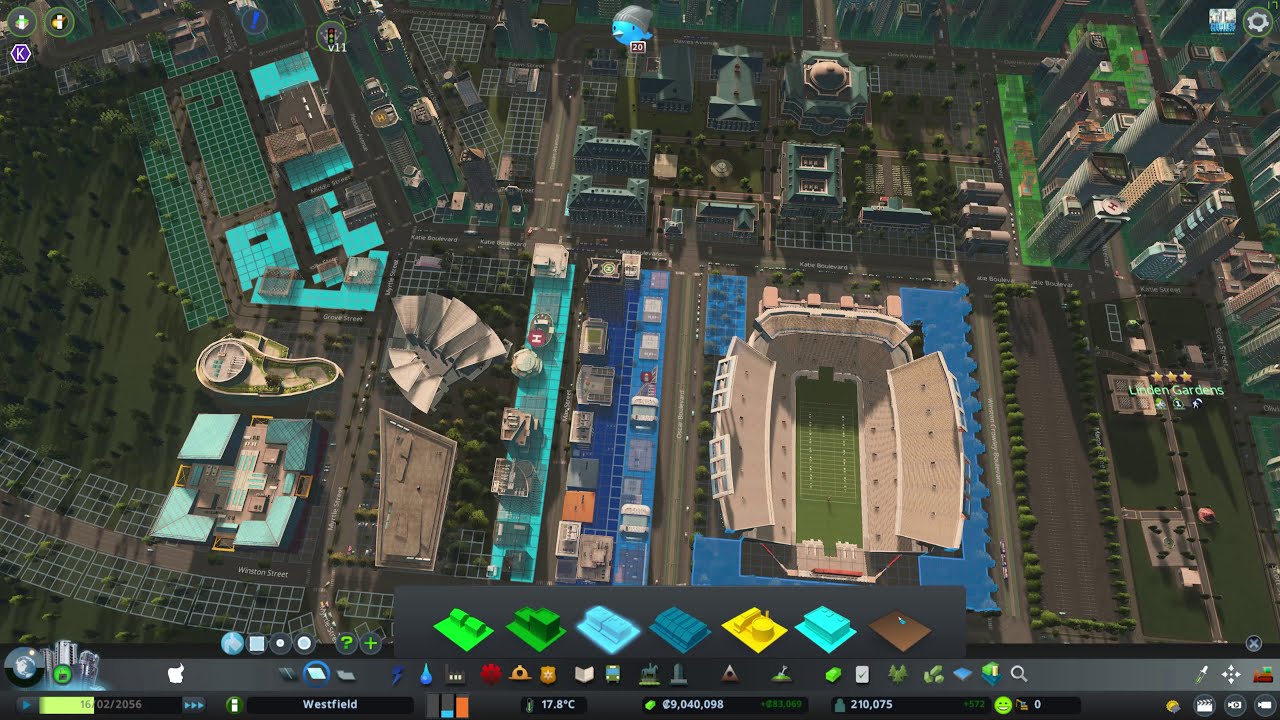
With universal free education gone, Westfield's campuses earn attractiveness with buildings: a drama club, research funding, and later gym, cafeteria and statues as Westfield University reaches two stars. A new district gets the usual basics first (police, fire, doctors, parks), offices as noise buffers and tree belts, broken tram lines are repaired, Japanese gardens and saunas go in, and the city nears 150,000.
What happens in this episode
Since last time, the forestry area grew, the career institute got two more buildings, and tuition fees went up again. The campuses had been reaching attractiveness only because of the universal education policy (free education). That’s gone, so they need buildings instead: a drama club for the liberal arts college and new research funding for Westfield University, which should upgrade in 2054.
How it was built
A new district
Residential demand is the priority, so a new area gets homes, with offices as buffers between them and the noisier commercial zones, plus schools and a big park. My routine for new districts: basic supplies first, then doctor’s offices, police and fire so people feel safe, then parks, which help high-rise homes develop. After that the district gets time to grow. Trees and bushes along the highway, the roundabout and between parts of town block the noise.
Fixing the trams
Check your lines regularly to make sure they cover all needs. One tram line was incomplete: it needed a turnaround, and a road couldn’t be upgraded in place. A new main tram track serves the area. I don’t always build straight lines, because using the landscape looks more natural. Another line gets a detour around the stadium.
Growing naturally
I usually don’t plan far ahead: cities develop, so mine should develop naturally too. A community school (I haven’t built many), taxi stands with Anarchy, and three Japanese gardens, my favourite small park because of the zen garden and koi. Westfield reached almost 150,000. The tram lines got stuck for a moment, and I was tempted to connect a highway ramp just to see how many people would drive in.
A two-star university
Westfield University reached two stars. A big park, gymnasium, cafeteria and statues went in, plus fan-club support and advertising. Level three is close.
Saunas and what’s left
Sick citizens got several saunas. Without the 81 Tiles mod’s extra tiles, there isn’t much buildable area left. There’s ore, oil and farmland on the map, but I don’t want more industry, and I want to keep the forests untouched.
Video chapters
- 00:00Attractiveness without free education
- 03:43A new district, offices as buffers
- 06:45How I start a new district
- 10:08Tree belts and transit checks
- 13:39A broken tram line
- 20:38A new tram loop around the stadium
- 23:58Letting the city grow naturally
- 27:23Japanese gardens and almost 150,000
- 30:30A two-star university
- 36:49Saunas and resources left on the map
Clicking a chapter starts the video above at that point.
FAQ
What do you build first in a new district?
Basic supplies, then doctor's offices, police and fire stations so citizens feel safe, and parks, which help high-rise residential develop. Then give the district time to grow.
Why check your transit lines regularly?
Road and track changes can break lines without you noticing. In Westfield a tram line was incomplete and needed a turnaround to work again.
Do saunas reduce sickness in Cities: Skylines?
I added several where citizens were getting sick. Wellness buildings like saunas improve health in their area.