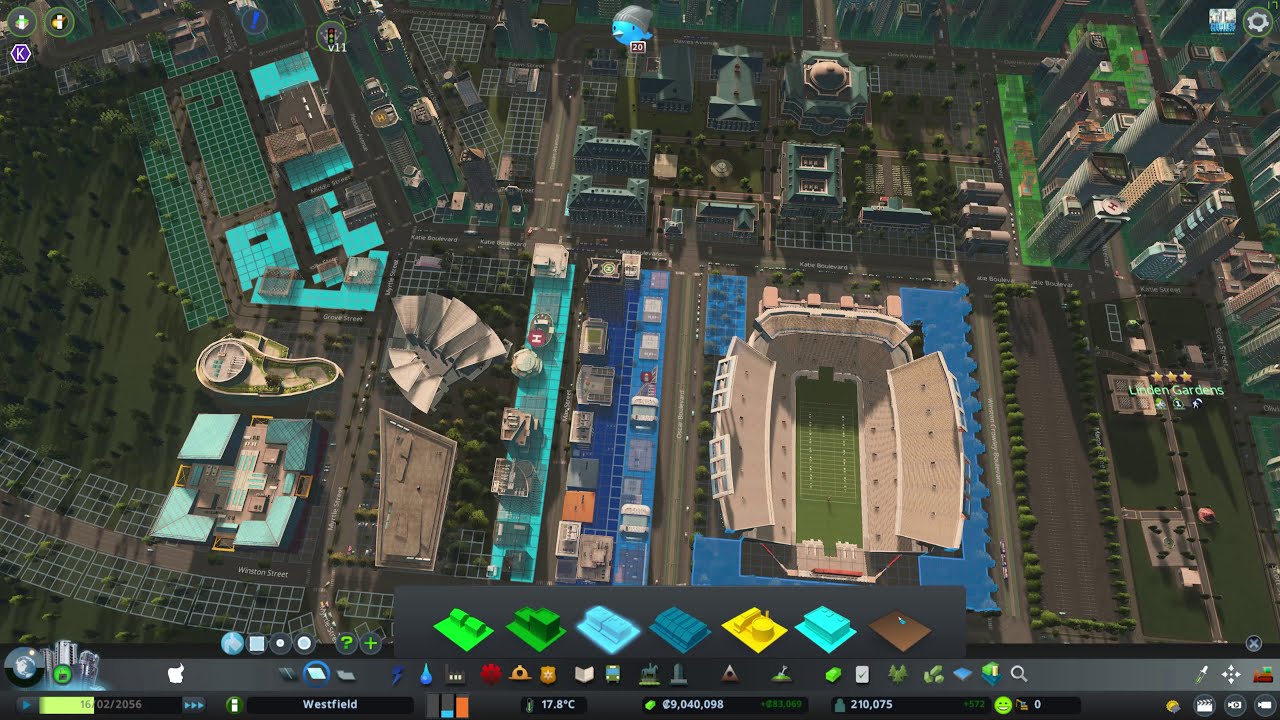
After a separate parking-lot tutorial, Westfield fixes the stadium lot's hidden space markings, builds a low-rise hillside neighbourhood off a new roundabout with power and water under the roads, untangles a truck junction near the farms with a one-way ramp and parking bans, and discovers that tree-lined roads measurably cut noise pollution. 24,000 citizens; a train station is next.
What happens in this episode
Between episodes I recorded a separate video on how the parking lot mod works. One thing I’d forgotten there shows up here: some parking-space markings disappear behind the road or lot surface. Moving the spaces up and down, or levelling the ground, makes them show again.
How it was built
Parking and costs
The bigger stadium lot fills after matches and empties properly. The older, smaller lot is used less, maybe because it’s so close that people just walk. Higher sports funding at both universities is expensive, but affordable.
A hillside neighbourhood
A new national road ends in a roundabout with room to extend later. Helper roads keep the roundabout straight, and then they’re deleted. The neighbourhood is low-rise with basic education and doesn’t cut into much forest, true to the main goal of not harming nature. That’s also why there’s little general industry. Many builders play differently, and I don’t blame them. I just try to be consistent. Power and water run under the roads with an electricity mod, the way a city planner would do it.
Commercial zones stay away from the roundabout. Small offices instead of high-rises, convenience stores, police, fire, a school and a small park follow.
A truck junction near the farms
An incinerator keeps waste under control. A junction near the farms jammed with trucks and U-turning drivers. Yield rules, no pedestrian crossing and a rebuilt two-lane highway helped, and a one-way ramp finally sorted the turnarounds. With Traffic Manager, parking is banned near major crossings. My advice: check your traffic regularly, because the sooner you fix a problem, the better.
High-rises and flour
High-rise residential zones went up quickly. The old town stays low-rise. The farm is at its maximum level, and a second flour mill now handles all the grain.
Trees vs. noise
Homes along a national road suffered from noise. Turning the road into a natural alley and planting trees visibly lowered the noise in the noise pollution view. I didn’t know the game went that far. Industry and the stadium remain hotspots. Westfield reached 24,000, the universities need more students, and the next step is a train station for freight, commuters and tourists.
Video chapters
- 00:00Fixing the parking-space markings
- 03:39A bigger lot and university costs
- 07:23A national road and a new roundabout
- 11:06Utilities under the roads
- 14:51Small offices, shops and a school
- 18:25An incinerator and a jammed junction
- 29:00A one-way ramp and parking bans
- 32:21High-rises and a second flour mill
- 39:33Trees reduce noise pollution
- 43:3124,000 and the train-station plan
Clicking a chapter starts the video above at that point.
FAQ
Do trees reduce noise pollution in Cities: Skylines?
Yes. Turning a road into a tree-lined alley and planting trees along it visibly lowered noise in the noise pollution view — enough that people would live next to a national road.
Why do parking-space markings disappear?
They can sink behind the road or lot surface because of small height differences. Raising or lowering the spaces, or levelling the ground, makes them show again.
Why keep zones away from roundabouts?
People park wherever they find space, and shops right next to a roundabout attract traffic that blocks it.