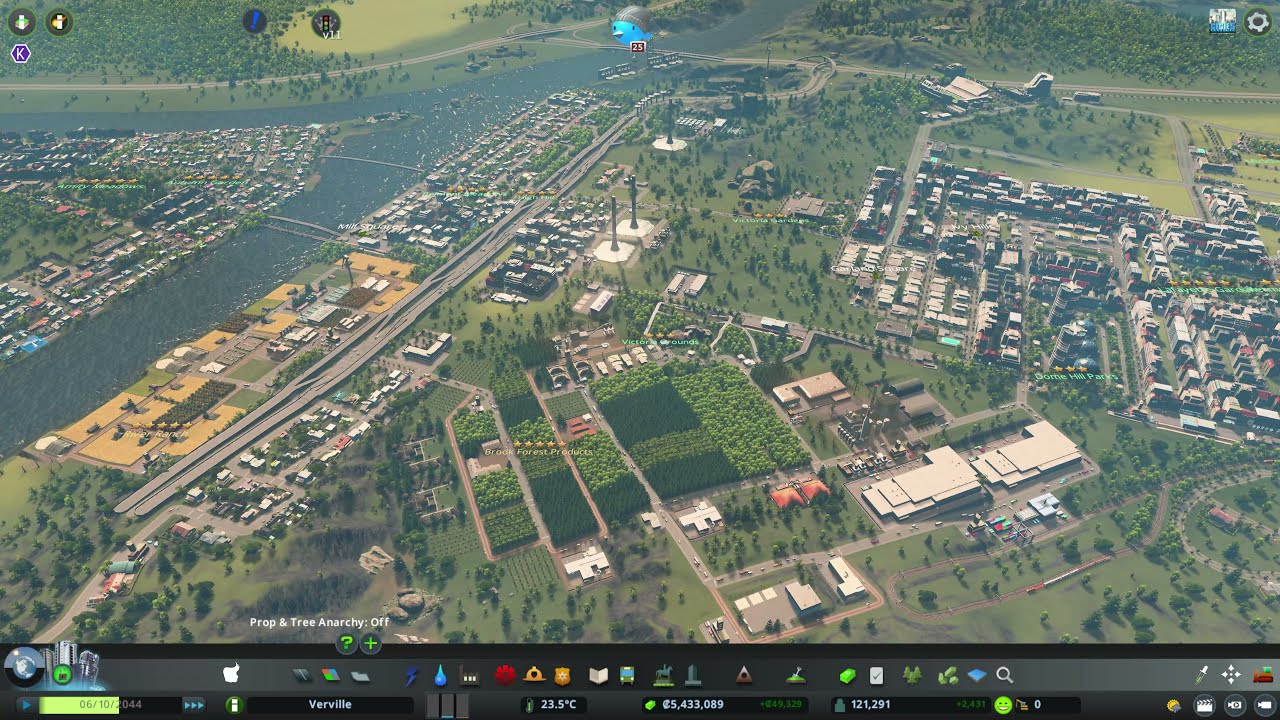
After a few weeks of streaming on Twitch, where dropped frames meant low-quality streams, I'm back on YouTube with a new city: Verville. The start shows my habits — gravel roads on 12-unit blocks so later road upgrades don't eat zoning, a corridor kept free for the highway, an eco water treatment plant and wind turbines instead of coal, lane rules and parking bans from day one, Belmont Meadows park and a farm called River Ranch.
What happens in this episode
I hadn’t played Cities: Skylines here for a few weeks, because I tried serving two channels: YouTube and Twitch. On Twitch, dropped frames meant playing in low settings and streaming in even lower ones. That doesn’t fit a channel built on high-quality 4K recordings, so I’m back on YouTube for good. To celebrate, I’m starting a new city: Verville, on one of the maps that come with the game.
How it was built
Gravel roads on 12-unit blocks
As always, I start with cheap two-lane gravel roads. Something I do differently: blocks are 12 units long, not 10. A bigger road takes one zoning square from each side, so with 12 units you still keep 8 full squares between two big roads after upgrading. I also leave five squares free for the highway I’ll extend through town later.
Water and services
Water pipes follow the roads to be realistic from the start. The eco water treatment plant costs more, but it pollutes less. At Hamlet: recycling, an elementary school and a doctor’s office. In my experience, people prefer moving into a town that already has these.
Traffic rules from day one
Industry brings in good tax money early. Lane management at the highway connection and no parking on ramps start immediately. At Tiny Town, gravel roads get upgraded and the roundabout widened. I should have used three lanes there from the start.
Parks and wind
A park area, Belmont Meadows, separates shops from homes, with a café because every park in my cities gets one. That’s a habit from my first trip to Japan. Power comes from wind turbines rather than coal, because of pollution. Industrial demand kept rising, and I really don’t want Verville to become an industrial town.
River Ranch
The farm gets a large area with the main building in the centre, so the workers’ barracks unlocked later sit close by. Fields grow wheat, corn, cotton, vegetables in greenhouses, oranges and pears. It’s named River Ranch. A local produce commercial zone keeps demand for farm products up, and a flour mill follows.
Buses and parking
A bus depot, bus lines, and parking bans on major roads and truck routes. Hold Shift to apply a parking ban to a whole road. Industrial demand suddenly vanished, so part of the industrial zone came out to let the soil recover. Taxes went to 11%. More tiles were bought before the end.
Video chapters
- 00:00Why I left Twitch
- 04:07Verville and gravel roads
- 08:41Why 12-unit blocks
- 12:44Eco water treatment and first services
- 16:45Lane rules and parking bans from day one
- 20:58Tiny Town and road upgrades
- 25:34Belmont Meadows and wind power
- 30:18Industry and commercial growth
- 35:55Laying out River Ranch
- 44:20Local produce shops and a flour mill
- 55:06Bus lines and no roadside parking
- 1:05:15Less industry, more tiles
Clicking a chapter starts the video above at that point.
FAQ
Why use 12-unit blocks in Cities: Skylines?
Wider roads take one zoning square from each side. With 12 units between roads, you still keep 8 full squares between two big roads after upgrading, so blocks stay buildable.
Should you build schools right at the start?
In my experience, yes. Citizens prefer moving into a town that already has a school, a doctor's office and recycling.
How do you remove parking along a whole road?
In Traffic Manager's parking tool, hold Shift while clicking — it applies to the whole stretch instead of a single segment.