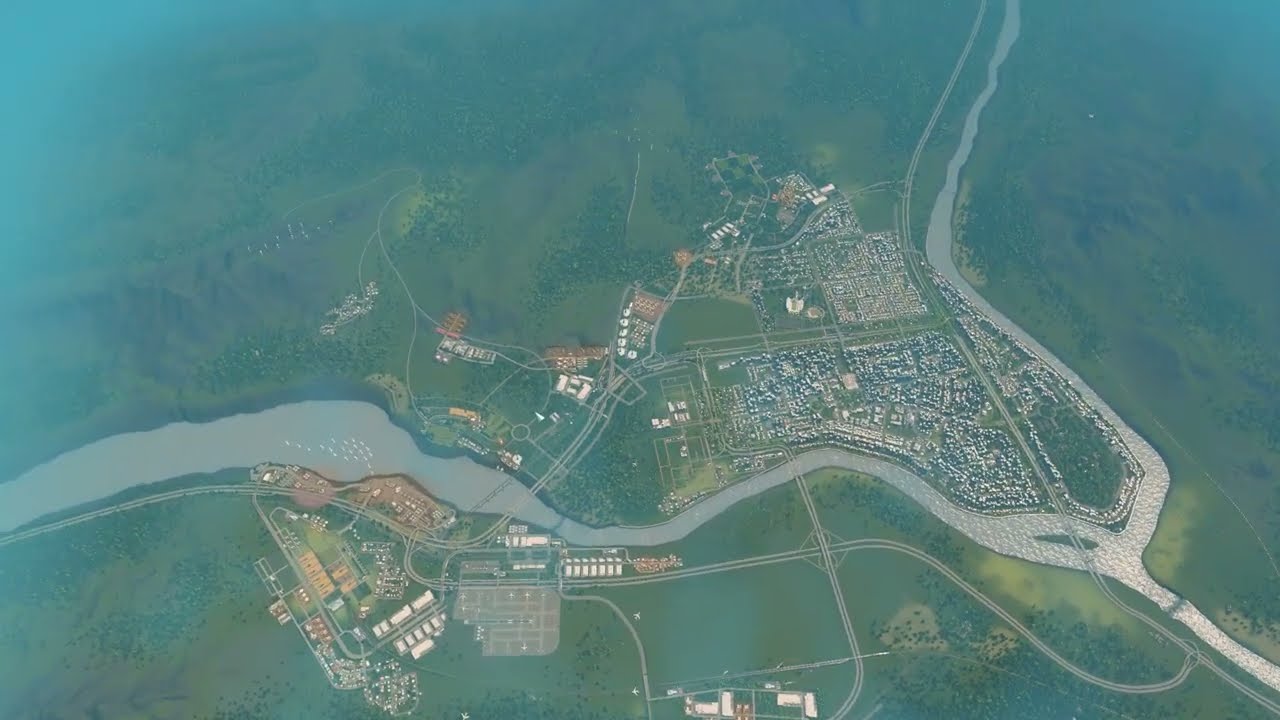
Springvalley needs money, so on newly bought tiles I start a huge forestry industry for export. It gets a main building, barracks, its own power and water, many warehouses with direct highway access, sawmills and pellet plants, a fire helicopter depot and watchtowers, and later a rail link. The water glitch keeps abandoning homes until I find the cause. The heating network goes, the police budget is cut, and a new residential area with a big park and a small farm follows. A casino fire burns trees, and the city reaches nearly 120,000.
What happens in this episode
Episode 55 built Sherry District with its mall and parking lots, and the homes there are getting denser. Water shortages had abandoned some buildings, so I connected all the separate water networks. Today’s big step is a huge forestry industry on newly bought tiles, for export and revenue. A viewer also suggested adding something special to make the city unique.
How it was built
I’m staying with Springvalley
A viewer asked if I’ll keep building Springvalley. Yes. Large areas are untouched, and downtown needs loosening up. The office district caused huge commuter jams back in the twenties episodes. I’ll play Cities: Skylines II from day one, but I’ll miss CS1’s mods and won’t give it up.
The water mystery
Homes kept losing water despite full supply, and I demolished three to let them rebuild. Meanwhile money dropped to about a million, so the forestry industry has to work. Later I found the cause: a silly mistake in the connections.
Laying out the forest
I used the wrong district tool at first, as always. For an industry using natural resources, you need the industry area tool. The big forest gets a main building, workers’ barracks, its own power plant, water and wastewater, and power lines laid in advance this time. Many warehouses have direct highway access, and a standard ramp is built. Then come sawmills, a biomass pellet plant, a fire helicopter depot and watchtowers. Balanced warehouses pulled a flood of trucks, so some are set to empty.
Where does the money go?
Residents pay most of the taxes. Forestry isn’t profitable yet, partly because of truck traffic. The police budget is cut by 25%. A rail link, built with parallel roads from the Network Multitool, takes some trucks off the roads. A ghost train had to be deleted.
Heating removed
The heating network from Episode 54 didn’t change a thing, so it goes. Power still has double the capacity needed.
A new park district
A new residential area gets a big central park, schools, doctors, fire, a bakery, dog parks and a man-made hill planted with the Forest Brush. A small farm squeezes in nearby. It could become one of the wealthier districts.
Fire and 120,000
A transport toy factory goes into the industrial hub. Then the casino caught fire, and nobody came at first. A lot of trees burned. Springvalley reaches almost 120,000. My last big city stopped at 130,000. I was afraid all the CS2 videos would make CS1 feel boring, but they haven’t at all. This game still fascinates me.
Video chapters
- 00:00Why a huge forestry industry
- 04:20Will I keep building Springvalley?
- 08:51The water mystery and a money problem
- 13:15Painting the forestry area
- 20:45Barracks, power and warehouses
- 25:09Found the water problem
- 29:30Pellet plants and one-way roads
- 37:51Where the money goes
- 42:20A rail link with parallel roads
- 47:04A ghost train
- 52:47Watchtowers and CS2 nerves
- 58:02Heating removed, a new park district
- 1:04:48A small farm in between
- 1:09:57District names and detours
- 1:15:01A transport toy factory
- 1:19:52The casino fire and 120,000
- 1:26:15Still in love with CS1
Clicking a chapter starts the video above at that point.
FAQ
Is a forestry industry profitable in Cities Skylines?
It can be, but it takes time for production to ramp up, and heavy truck traffic eats into it. A rail connection and warehouses help export the goods.
Does a heating network attract residents if there's no winter?
In my test it didn't seem to change anything, so I removed it to cut costs.
Why do warehouses set to balanced pull so many trucks?
They both fill and empty at once. Setting some warehouses to empty shows how the flow affects your budget.