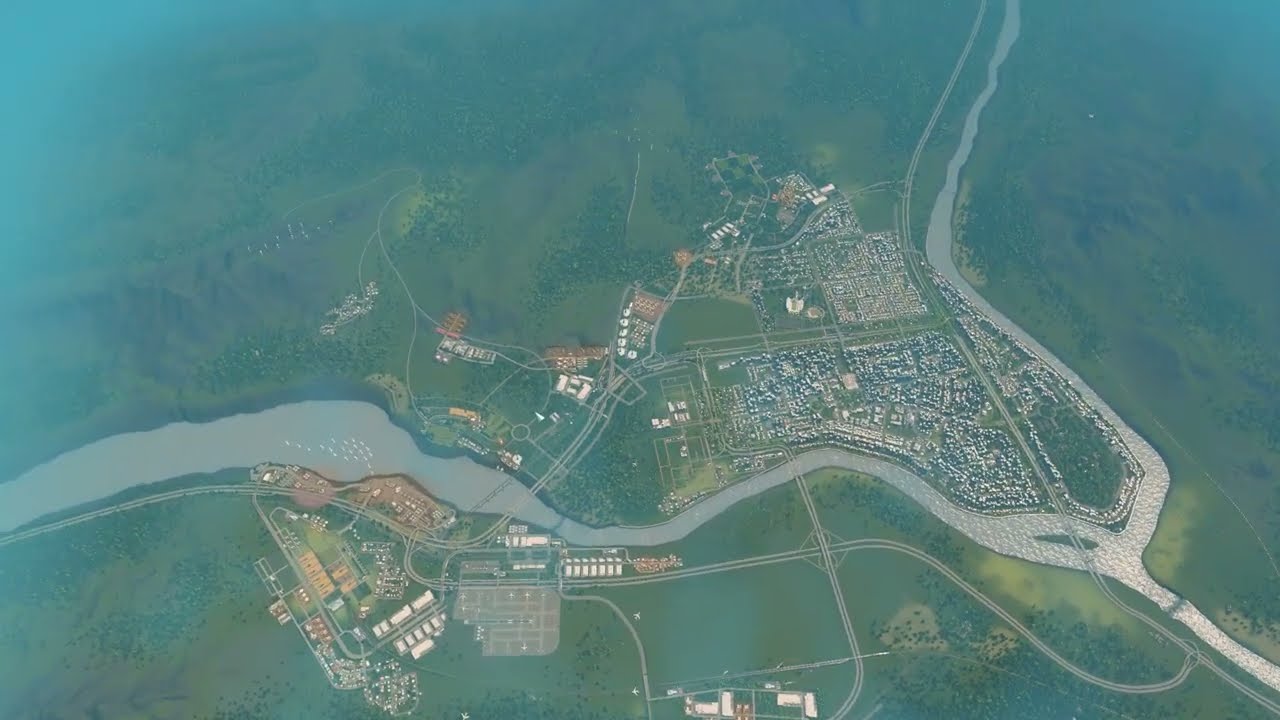
A short episode. Looking back over how Springvalley grew from its first interchange, I note that the city only uses buses and subways at almost 110,000 citizens, and that high-rises hold far too few people. I'll test Realistic Population before CS2 arrives. Sherry District is extended, and Springvalley gets its first mall with a big parking lot behind it, plus a mixed residential, commercial and office zone as a buffer. A water glitch is fixed. Disaster shelters and services prove very expensive, and the next plan is a huge forestry industry on new tiles.
What happens in this episode
After the zoo, hotels and clean industry area in Episode 54, I want a transition between industry, high-rises and the old-town area.
How it was built
How Springvalley grew
If you’ve followed from the start: the city began around the first interchange, then grew outward. The first farm moved, which freed this land for dense high-rises. At almost 110,000 citizens, I still only use buses and subways. Am I missing something? Given its size and towers, the city should hold far more people.
Realistic population
High-rises with only about a hundred residents feel wrong. The Realistic Population mod would likely overwhelm this setup now. I should have used it from the start. I’ll test it on this city shortly before Cities: Skylines II comes out, to learn from it. (My Realistic Population tutorial covers the settings.)
Extending Sherry District
Sherry District is extended, so all the new houses follow the same policies.
A first mall
Springvalley gets its first mall, with parking lots behind it. Have you ever seen a mall without a huge parking lot? Next to it, a mixed residential, commercial and office zone fills the space between the districts, with some gaps left for other buildings. The mall should pull shoppers who might visit the zoo too.
Water and growth
The water glitch returned, so I connected all the water sources across the city, and it’s gone. Some buildings were abandoned for lack of visitors. I’d built a lot of commercial recently and needed more residents. Commercials grow quickly. Global happiness is good.
Shelters cost a fortune
A clinic, a general hospital and disaster shelters across the city improved safety, but disaster management is really expensive. I’m burning money, and I’ve already borrowed once.
Next: forestry
The plan: buy three more tiles with the 81 Tiles mod and build a huge forestry industry with a direct highway route. I’ll think it through before building something weird.
Video chapters
- 00:00How the city grew
- 04:23Extending Sherry District
- 09:36A first mall and its parking lot
- 14:34Water glitches and commercial growth
- 20:16Shelters and burning money
- 27:38Plans for a huge forestry industry
Clicking a chapter starts the video above at that point.
FAQ
Does a mall in Cities Skylines need parking?
Have you ever seen a mall without a huge parking lot? Add one behind it; it looks realistic and gives shoppers somewhere to park.
Why do high-rises have so few residents in Cities Skylines 1?
The base game uses low household counts per building. The Realistic Population mod changes that, but adding it late can overwhelm an established city.
Are disaster shelters worth it without disasters?
They're expensive to run. Without disasters enabled, check the budget carefully before placing many.