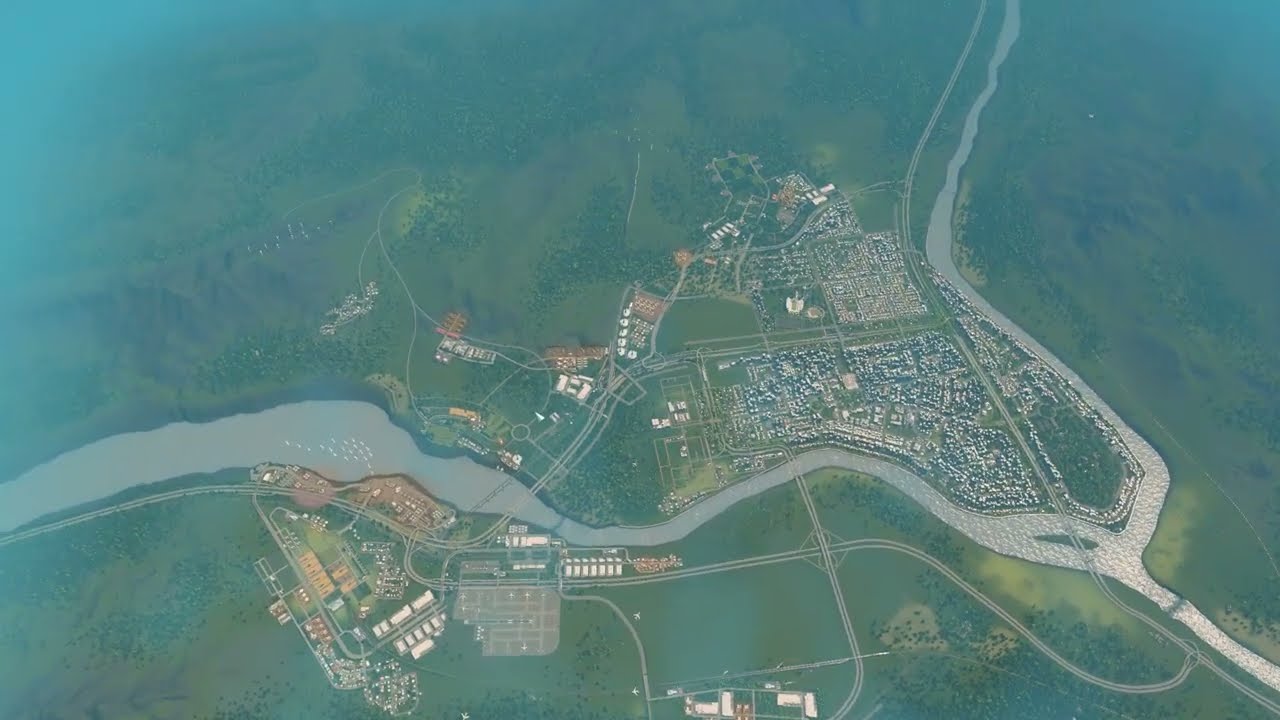
Two weeks before Cities: Skylines II, and after roughly 300 to 350 recorded hours, I'm still building Springvalley. A new highway interchange connects the forestry hub with the rest of the city and the cargo airport. Leftover power lines next to a street turn out to be why no warehouses could be placed. The warehouses are set to export unique factory products, and ramp lanes and node spacing are fixed. The residential area grows for workforce, the budget stabilises, and the new Maple City Park fills up quickly at 121,000 citizens.
What happens in this episode
Cities: Skylines II launches in about two weeks. Episode 56 built a big industrial hub with factories, a highway connection and the start of a huge forestry industry. I’m not stopping CS1. I’ve recorded about 300 to 350 hours in this city, and it’s worth it. Two recycling plants now cover the city, so I need fewer small recycling centres.
How it was built
A new interchange
Two things are outstanding: a special tourist attraction, planned for next time, and another highway connection that makes it easier for trucks to move between the forestry hub and the cargo airport. I test the rough interchange first, then set lane connectors with room for transitions. It’s a bit messy, but cars are already using it in several directions.
Power lines blocking warehouses
I couldn’t place new warehouses, and rewatching the recording showed me why. Old power lines next to the street block buildings. It’s reasonable, but I didn’t need them anymore, so they go. The warehouses are set to unique factory products and empty, so goods are shipped out of Springvalley. A sneaky extra link lets traffic go between the roundabout and the highway.
Lane management
In the test run, trucks stopped because two nodes sat too close, and I’d forgotten lane management. TM:PE lane arrows go in, and the decision zone is extended, so trucks pick lanes earlier. I’m curious how CS2 copes without TM:PE at first. I also reshape an ugly off-ramp curve.
Recap
The new interchange will pay off as industrial traffic grows. Trucks can reach any area quickly via the highway. The residential area grows for workforce, policies change, and the budget is finally under control. Downtown is still too square for my taste now, and some avenues aren’t perfect, but traffic flows.
Maple City Park
At 121,000 citizens, the parking lot by the stadiums is packed even without a game day. Maple City Park gets an official entrance and side gates, and visitors climb from 23 to 31 within seconds. It should upgrade quickly. It was a slow, unplanned episode, but I’ll keep building Springvalley after CS2 launches too.
Video chapters
- 00:00300 hours in and still building
- 04:29Testing the new interchange
- 11:03Power lines blocking warehouses
- 15:27Exporting unique factory goods
- 20:00Two nodes too close and lane management
- 32:30Recap: workforce and budget
- 37:00121,000 and a packed parking lot
- 41:07Maple City Park
Clicking a chapter starts the video above at that point.
FAQ
Why can't I place buildings next to a road?
Check for power lines running along it. Buildings can't be placed under or right next to power lines, so remove ones you no longer need.
Why does an industrial area need its own interchange?
Trucks can then reach any part of the city quickly by highway instead of crossing town, which gets more valuable as industrial traffic grows.
How do you stop trucks braking before a ramp?
Space the nodes out, set lane arrows with TM:PE and make vehicles choose their lane earlier, well before the ramp.