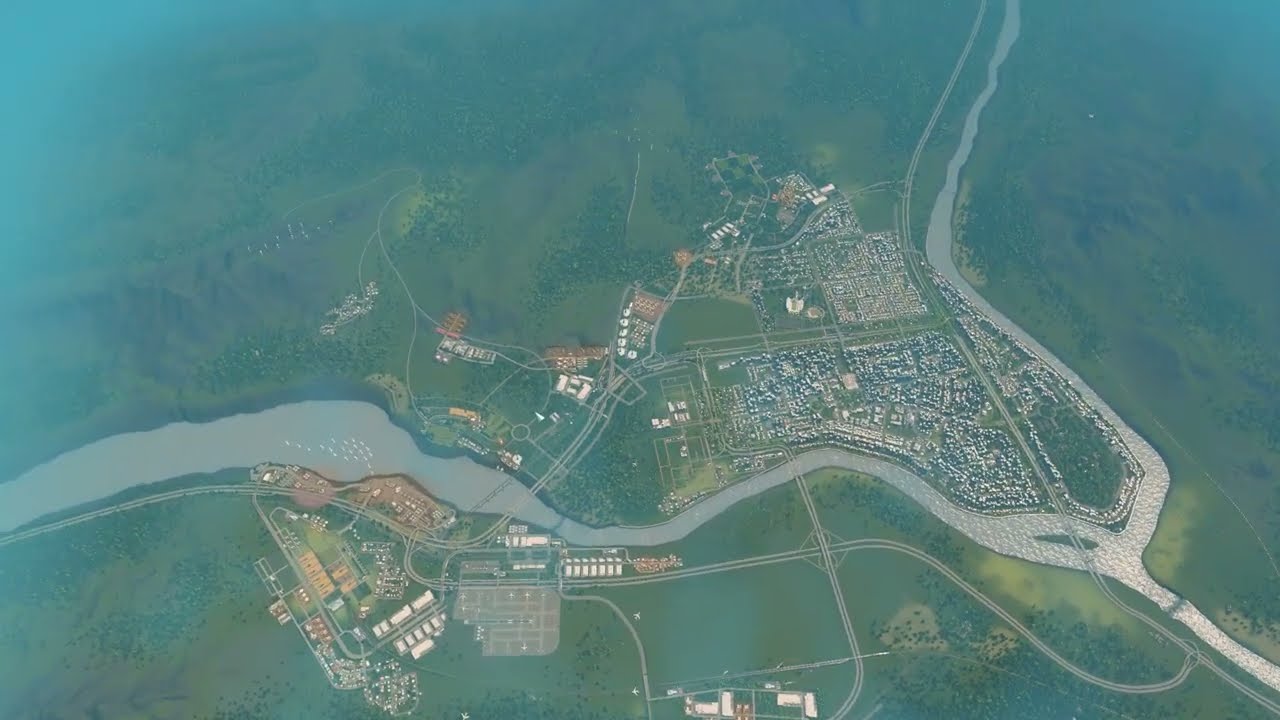
I recorded this episode twice, because the first attempt at Springvalley's forestry and oil districts looked bad. In the second attempt the oil industry is dropped for now and Ramasaki Industry, the forestry district, moves into the mountain foothills. The main building, barracks and sawmill are moved and the rest is rebuilt. Water towers, two inland water treatment plants, fire stations, a fire helicopter depot with watch towers, police and waste management follow, then pulp, pellet and engineered wood plants and a simple new highway ramp.
What happens in this episode
Episode 23 built the highway connection for two industry areas. I’m recording this episode a second time. The first attempt at the forestry and oil districts looked so bad that I didn’t want to keep it.
How it was built
No oil for now
The oil industry was planned close to the outskirts. I don’t need oil right now, and in Cities: Skylines it always looks messy and dirty, so it’s dropped for now. It might come back on the other side of the river.
Trees on the roads
Prop Anarchy was still on last time, so the new roads were covered with trees. With it off, rebuilding the roundabout cleared them automatically.
Moving Ramasaki Industry
This time I keep the landscape in mind, since we’re at the beginning of the mountains. The forestry main building, the workers’ barracks and the sawmill move to the new site. The log yards, the leftover farm buildings and the old warehouses are deleted, and the old industry is de-zoned. The road layout of the remaining rural area stays untouched to keep its character. I extend the industry area generously. A specialised factory district with low-income housing nearby could follow.
Power, water and treatment
Power plants stay on the mountainside with lines running down. Water comes from water towers, which look typical for rural areas. The only option for wastewater here is an inland water treatment plant, so two go in. They don’t look nice, but there’s no way around it.
Fire, police and waste
A forestry district needs fire cover, so it gets:
- fire stations, on a dirt road rather than the collector road;
- a fire helicopter depot;
- fire watch towers;
- one police station and waste management, which I always forget.
Processing and a ramp
Industry roads become one-way where it helps. The processing buildings go in: a pulp mill, a biomass pellet plant and an engineered wood plant, which will help with furniture later. Space is left empty for future growth, and a simple highway on and off ramp gets lane management and no pedestrian crossings. Finally the warehouses are set to forestry resources.
It’s far more organised than the cramped first version, and I like it much more.
Video chapters
- 00:00Dropping oil, fixing trees on roads
- 04:00Second attempt, moving the buildings
- 08:34De-zoning and a rural edge
- 12:54Water towers and treatment
- 17:22Fire, police and waste
- 21:40Processing plants and a new ramp
- 26:21Warehouses set to forestry
Clicking a chapter starts the video above at that point.
FAQ
Where should a forestry industry go?
Near the forest resource at the edge of the city, ideally where the landscape already feels rural, like the foothills of mountains. Keep processing close to the log yards so trucks don't cross town.
How do you cover a forestry area against fire?
Use fire stations plus a fire helicopter depot and fire watch towers. The towers spot forest fires early and the helicopters reach areas trucks can't.
Why do trees appear on new roads?
If Prop or Tree Anarchy is active when you build, existing trees stay on the road. Turn anarchy off before building roads, or delete the trees afterwards.