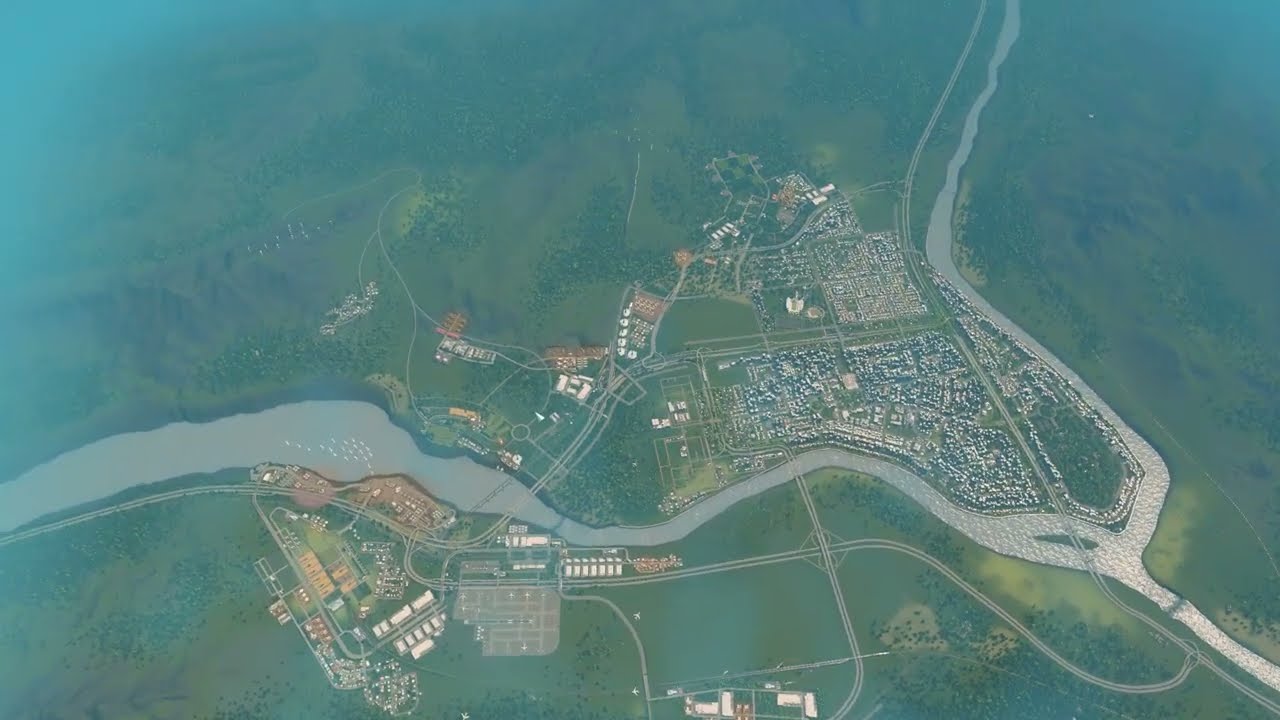
Following the planning session, Springvalley extends its grid north along the highway with tree-lined arterials and water mains, then builds its first suburb: small blocks subdivided with bike-lane roads, low-density homes, schools, a doctor's office, two parks, small shops and offices, the city's first postal service, and a district with a high-rise ban and encouraged biking. Lots of people walk from here into downtown.
What happens in this episode
After the planning session, it’s time to bring the plan to life. The new IT and finance office towers are in. Still, at around 35,000 citizens, the city looks like it should have a couple of hundred thousand, which is still my main complaint about Cities: Skylines 1. I won’t use Realistic Population here because it would probably break the town. Achievements weren’t unlocking either, and I couldn’t find out why.
How it was built
Extending the grid
New roads go north at 90-degree angles, using helper lines: curves are easiest to get right when you sketch with helper roads first. The main roads get trees to reduce noise. A highway will come later. The arterials that follow the highway and the river are only sketched for now, because the industry and power plants have to move first. Water mains are laid ahead of time.
A small-block suburb
This first suburb is subdivided into small blocks, something I usually avoid, but I don’t want big houses here. Inner roads become roads with bike lanes to get people cycling instead of driving. Low-density homes, two squares saved for an elementary school and a high school, a doctor’s office, a police station and a fire station. An interchange got signs and no pedestrian crossings so it flows.
Parks, shops and offices
Two parks, including Hawthorne Park, get their gates and will be decorated later. Shops grew fast: a drugstore was at level three almost immediately. Once a city reaches a certain size, money stops being a problem and you can focus on designing it the way you want. The highway next to the suburb gets sound barriers. Small offices go in so people can work near home, though they grow taller than I’d like.
Postal services
Springvalley had no postal service yet. In an earlier game I found out post offices are crucial for a city to grow. It’s strange, but that’s how it is, so they went in.
A high-rise ban
The suburb gets its own district, after I accidentally painted a park district first, with a high-rise ban, encouraged biking and high-tech housing. Next time I’ll show how to move industry without losing its levels. Lots of people walk from here into downtown, which takes traffic off the roads.
Video chapters
- 00:00New towers — and still only 35,000
- 04:21Extending the grid with helper lines
- 08:38Water mains ahead of time
- 13:15Small blocks and bike-lane roads
- 17:38Services, a park and a fixed interchange
- 22:19Hawthorne Park and fast-growing shops
- 26:53Sound barriers and dead-end streets
- 31:47Offices and postal services
- 40:32A district that bans high-rises
Clicking a chapter starts the video above at that point.
FAQ
How do you stop high-rises in a suburb?
Paint a district (not a park district) over the area and enable the high-rise ban policy. Encouraged biking and high-tech housing are useful there too.
Why use roads with bike lanes in suburbs?
They encourage residents to cycle instead of driving, which suits quieter, low-density neighbourhoods.
Do you need postal services to grow?
In my experience, yes — post offices turned out to be crucial for a growing city in Cities: Skylines.