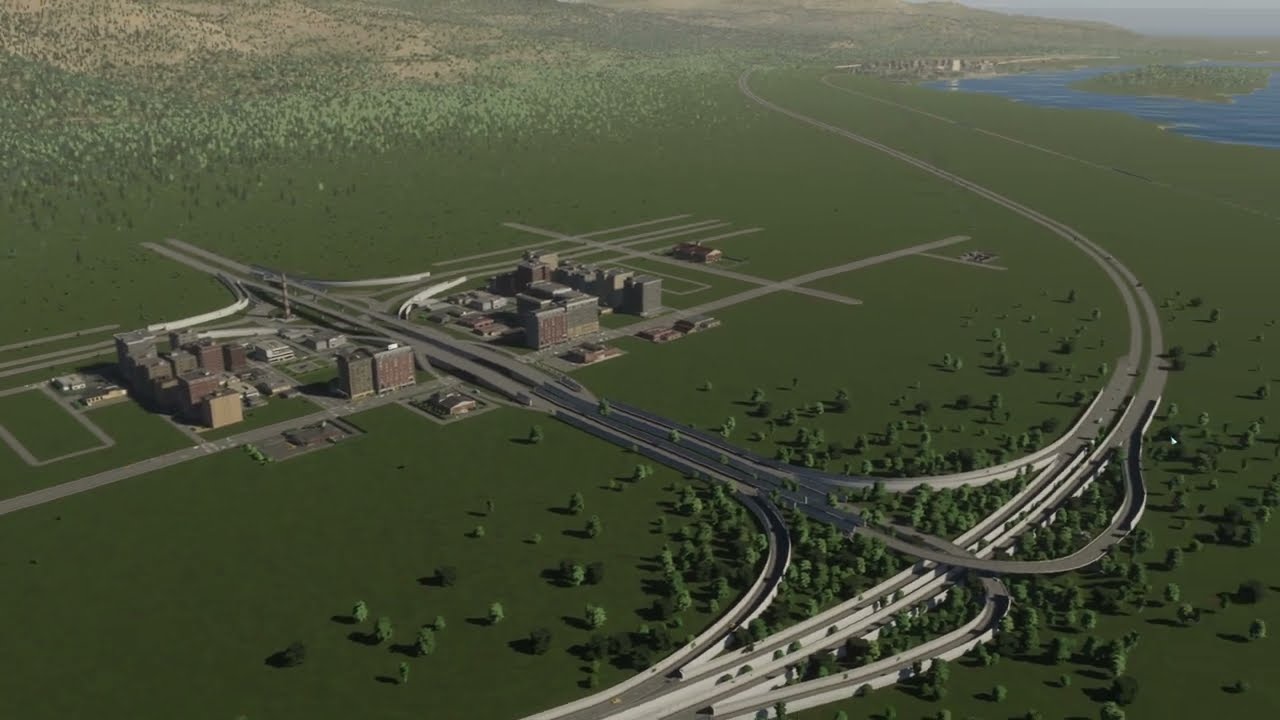
The first episode on my own map, inspired by Japan's west coast: a wind turbine for power, narrow two-lane roads hugging the railway, waterfront homes with beach paths, the first mods after modding support arrived — and a classic beginner mistake, a sewage outlet upstream of the water pump, which poisoned the drinking water.
What happens in this episode
Shiroku marked my return to Cities: Skylines II after months away. One reason for the break was that I wanted to make maps, and the unofficial editor was painful, so I waited for the official one. Shiroku is the result: an imaginary stretch of Japan’s west coast, with large mountains that are mostly unbuildable, a small lake, a few islands and a starting tile with highway connections from the north, west and east. It’s Japan-inspired, but I still play with right-hand traffic because left-hand traffic is hard for me to get used to. It was also my first time playing with mods after official modding support arrived.
This episode is as much about how not to start a city as how to start one.
How it was built
Power without resources
The resource view shows only groundwater. No ore, no oil and no electricity connection. A coal plant would have been the obvious choice, but I don’t like them, so the first power comes from a 20 MW wind turbine, even with a “wind speed too low” warning. It ended up producing about 5 MW, enough for the start.
Narrow roads next to the tracks
A railway runs right across the starting area, and in Japan homes often sit right next to the tracks. So the first streets are narrow two-lane roads that follow the railway. They are laid out roughly on a grid without following it strictly, because that’s how many Japanese neighbourhoods feel to me. Small shops come early so residents can shop locally.
Waterfront homes and beach paths
The first homes are the waterfront housing type, which brings much-needed variety compared to the standard houses. Footpaths go in straight away so the area gets a relaxed, beachy feel and people can walk along the shore. Here the residents matter more than traffic. Trees, like the hickory, go in with the Line Tool. That should have been in the base game from the start, because it makes decoration so much easier. A plot is left empty for a future train station so nothing has to be demolished later.
A zoning tip: when the game insists on a lot shape you don’t want, place the buildings where you want them, then delete the path that forced the layout. Zoning still did odd things, like switching lots from 2×2 back to something else after they’d been placed.
The sewage mistake
This is the lesson of the episode. I placed the sewage outlet next to the groundwater pump without checking which way the water flows. Pollution reached the drinking water, people got sick and some moved out. Moving the outlet, cleaning up the connection and upgrading the water supply fixed it, and residents slowly came back. Always check the flow and the pollution view before placing either building.
Milestones and first impressions
Tiny Village unlocked map tiles, expansion permits and a development point, which I saved. Small Village brought loans, taxation, medium-density housing and education. The elementary and high schools are huge for a rural Japanese setting, and the cemetery doesn’t look Japanese at all. Residential tax went up slightly, from 13 to 15%.
My honest impression at the time: the road tools are fantastic. An interchange with one underpass and one overpass took a fraction of the time it would have in the first game and looks like something real. But some basics felt missing, and I understood why so many players were unhappy with the game then.
Video chapters
- 00:00The Shiroku map, inspired by Japan's west coast
- 04:05No resources, so a wind turbine
- 08:32Japanese-style narrow roads by the railway
- 13:06Waterfront homes and beach footpaths
- 18:45Line tool trees and a reserved station plot
- 23:28Zoning quirks and why there was a break
- 27:51Tiny Village milestone
- 38:37What CS2 does better: road tools
- 45:26The sewage mistake and the water crisis
- 49:40Small Village, taxes and lessons
Clicking a chapter starts the video above at that point.
FAQ
Where should the sewage outlet go in Cities: Skylines 2?
Downstream of your water pumps, never upstream. In this episode I placed the outlet next to the groundwater pump without checking the flow direction, the water got polluted, people got sick and some moved out. Check the pollution and water info views before you build either.
Is the Shiroku map available?
It's a custom map I built, inspired by the west coast of Japan: mountains, a small lake, islands and a starting tile with three highway connections. I planned to publish it on Paradox Mods.
Does Shiroku use left-hand traffic?
No. It's a Japan-inspired map, but the first episodes use right-hand traffic because I still found left-hand traffic hard to work with.