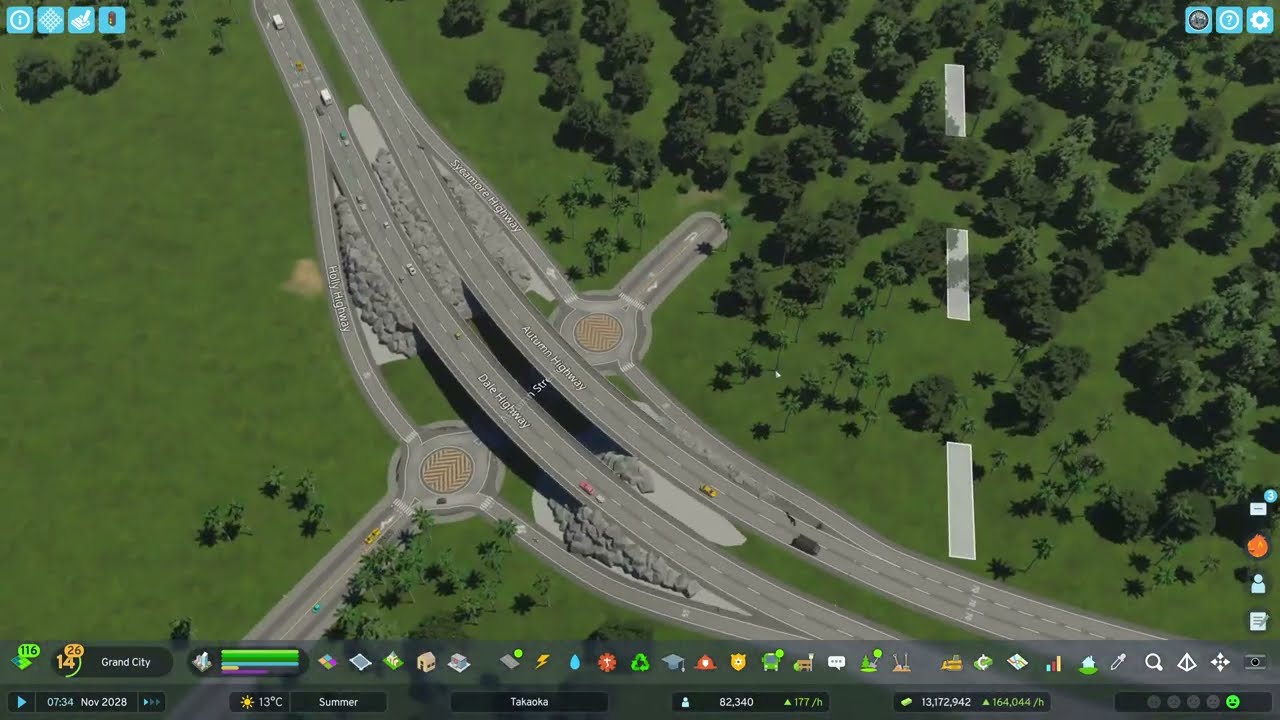
The governor decides: the industry goes. Takaoka buys 23 tiles in the east, where the wind carries pollution out to sea, builds two cargo ship terminals, a cargo train hub, an elevated passenger station for workers and freight tunnels through the hills — then demolishes the old industrial zone, keeping a few props as a memory of it.
What happens in this episode
The mixed-use district and its small Chinatown from episode 20 are finished, but the smog over the beach isn’t going away. So the governor of Takaoka makes a decision after talking to the island’s environmentalists: the industrial area moves. In the east, the wind usually blows out to sea, so a large port there keeps the jobs without poisoning the homes.
How it was built
Buying the east
The relocation needs room: 23 tiles for about six million, including the ones in between, so I can build without leaning on Anarchy. The terrain is flattened on a large scale for the new harbour, with plenty of space for future growth.
Port and rail first
The basic layout: two cargo ship terminals and a cargo train terminal to redistribute goods across the city and the region. Workers have to get there, so an elevated passenger station on a fast train line comes next. I plan the railway before anything else, because rail is always the hardest thing to retrofit into an existing city. Real cities face the same problem as they grow. A parallel road and a small roundabout connect the station to the road network.
Freight tunnels
Getting freight through the hills took far longer than expected. I don’t enjoy tunnels in Cities: Skylines II: connecting them is fiddly, I was at maximum depth at times, and you can’t see the trains, and I love watching trains run through a city. A few nodes needed manual height fixes where a tunnel rose instead of descending. In the end the industrial tracks reconnect to the freight network in both directions.
Power and sewage
No new power plant was needed, just a transformer and an upgrade. Nuclear and coal were never an option for this green city. Sewage needed its own treatment plant, so development points went into the advanced water treatment station.
Saying goodbye to the old industry
This was the sad part. With the new area ready, the old industrial zone near the beach is demolished building by building. Its industries did their job, but they polluted the homes. I really missed the industry policies from the first game, which let you make an industrial area more eco-friendly. The old area will become something new, maybe an entertainment or creative district, with a few industrial props left on purpose as a reminder of what was there.
New signature industry goes into the eastern zone, including an oil refinery, and the old cargo terminal might go too. The new area gets a fire station with a helicopter and a police station. A disaster aid office turned out to be wasted money.
Depots, ramps and ships
The small train garage depot only serves industrial trains. The big rail yard was needed for commuter trains to the new elevated station and downtown. Industrial demand is still high, because the old zone was bigger than I thought. The highway ramps lose their crossings and traffic lights and may become a three-lane highway. I forgot to set up the ship routes at first, then added them at the end. The old industrial land gets new homes, shops and a recreation area in episode 22.
Video chapters
- 00:00The decision: move the industry downwind
- 04:13Buying 23 tiles, flattening the new port
- 10:31Cargo terminals and a worker train
- 15:19Stations and road connections
- 24:51Freight tunnels through the hills
- 29:38Power and a new sewage plant
- 39:27Demolishing the old industry
- 48:26Services for the new area
- 56:48Rail depots, ramps and the first ships
Clicking a chapter starts the video above at that point.
FAQ
How do you fix pollution from industry in Cities: Skylines 2?
If filters and moving single buildings don't help, move the industry. Check the wind direction and pick an area where pollution blows out to sea, build the new port, rail and road connections there first, then demolish the old zone.
Why plan railways before a new district?
Rail is the hardest thing to retrofit once roads and buildings exist. In Takaoka the freight lines needed tunnels through hills at maximum depth — far easier before the area is built up.
What's the difference between the small train depot and the rail yard?
In my build the small train garage depot only served industrial trains, while the big rail yard was needed for commuter trains to the new elevated station.