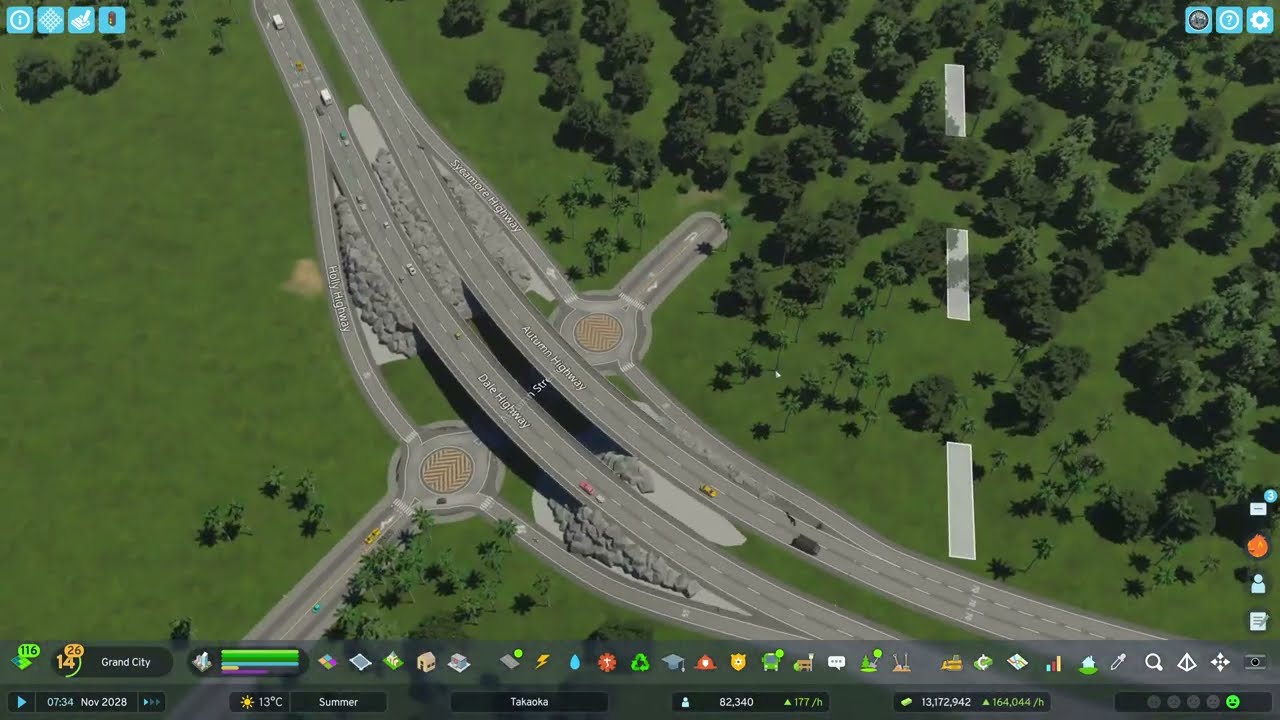
The industrial harbour is completed with a mix of hand-placed and zoned buildings. Too many one-way roads had confused the trucks, so they're replaced with plain two-lane roads, traffic lights go, and trucks start using the cargo rail station. A second cargo terminal serves the farming area, and a small low-rise neighbourhood grows next to the tracks.
What happens in this episode
Episode 8 of Takaoka is all about finishing the industrial harbour from part 1, and getting trucks to use the cargo railway station instead of crowding the port. It turned out easier than expected, and no new tiles were needed.
How it was built
Hand-placed and zoned industry
After a long road-building section, the industrial demand was satisfied for the moment, so I stopped and left a few lots empty for the game to fill. I deliberately mix hand-placed industrial buildings with zoned, upgradeable ones. As the zoned buildings grow, the area looks more natural than if every building had been placed one by one. A strange interchange is removed and replaced by a two-lane road and a short alley.
Fewer one-way roads
The truck routing was confusing, probably because I had built too many one-way roads. Replacing them with regular two-lane roads changed the traffic right away: dump trucks and larger trucks started arriving, a train came in, was unloaded and left again with trucks taking the cargo. Parking is disallowed in the district, and traffic lights are removed at several crossings where traffic can sort itself out.
A second cargo terminal
The rail network is partly rebuilt to make room for a second cargo train terminal, mainly to carry goods from the farming area to the depot. It has little road access on purpose. A traffic light that didn’t belong there is removed too.
Homes by the railway
The leftover land next to the tracks and a small park becomes a low-rise neighbourhood. Residential demand needed it anyway, and it’s a nice place to live, as long as nobody complains about the trains. A small stop between the central station and the outskirts might come later.
Recap
More schools were needed. Elementary schools in particular need constant attention, and it felt like every other street could use one. The budget dipped after all the school building, from around 80k to about 40k per hour, with more than a million in the bank, which is fine. Mail service is back, happiness is good, and a small park burned down. After the return to a normal road layout, truck traffic through town stays low.
Video chapters
- 00:10Plan: finish the harbour, fix the trucks
- 12:17Mixing hand-placed and zoned industry
- 17:09Two-lane roads instead of one-ways
- 21:51A second cargo terminal for the farms
- 26:44Homes by the railway
- 32:49Recap: schools, budget and trucks
Clicking a chapter starts the video above at that point.
FAQ
Why do trucks ignore my cargo train station?
In my case, too many one-way roads made the routes confusing. Replacing them with ordinary two-lane roads and removing unnecessary traffic lights got trucks using the cargo rail station properly.
Should you place industrial buildings by hand or zone them?
Both. Hand-placed buildings fill awkward spots; zoned lots grow and upgrade over time. The mix looks more natural than either on its own.
How many elementary schools does a city need?
More than you'd think. In Takaoka it sometimes felt like every other street needed one — keep checking the education panel as the city grows.