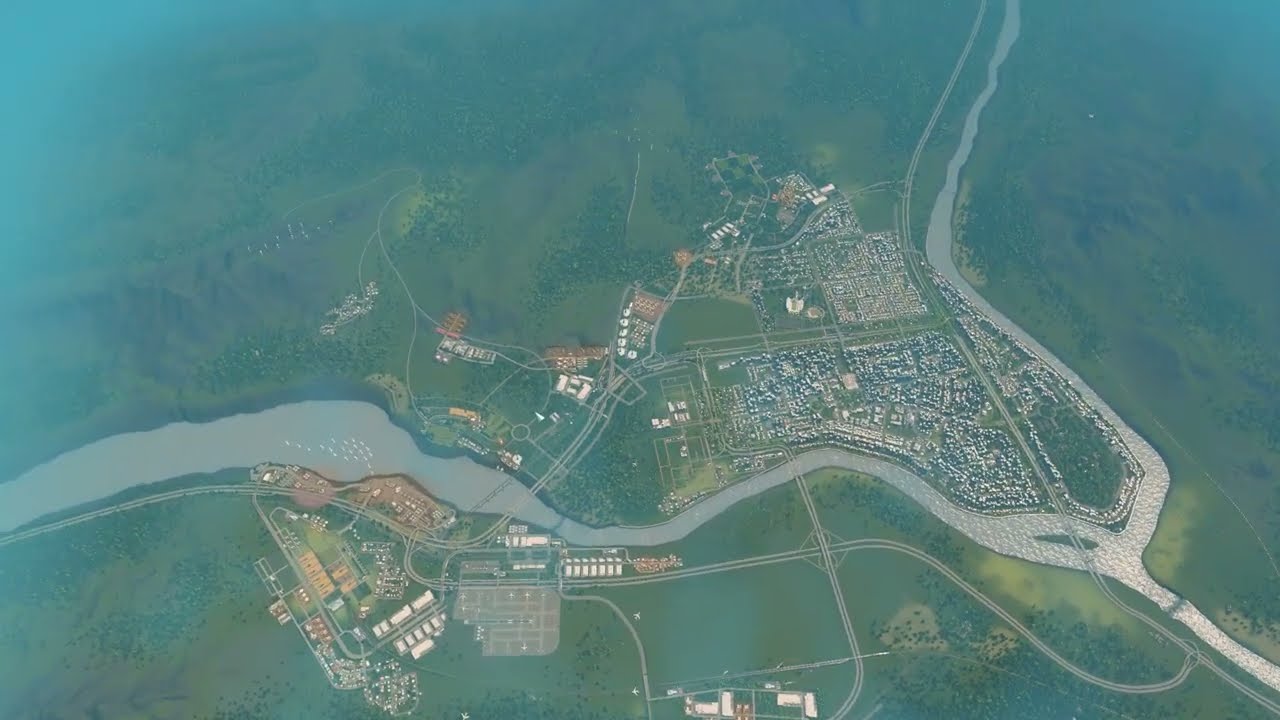
A viewer was right: from above, the big interchange makes sense, but as a driver I'd go nuts. So everything after the main junction is rebuilt as a four-lane elevated highway between downtown and the nature reserve. It's simpler, it works better than expected, and it leaves room for a roundabout underneath. The ramps are hidden behind trees, a test roundabout replaces a busy artery junction, Node Controller adds lane-change room, and a grid is broken up with a new intersection and four-lane roads.
What happens in this episode
A longtime viewer commented on the interchange from Episode 29. From the bird’s-eye view it makes sense, but as a driver you’d probably go nuts. It did solve the problem, so the main junction stays, and everything after it is rebuilt into something simpler.
How it was built
Four lanes, elevated
The new section is a four-lane elevated highway. I love elevated highways. It separates the very downtown area from the nature reserve district. One stretch I forgot to downgrade to three lanes, so the pedestrian links had to be rearranged. A pointless road and a traffic light come out, and the park stays. Building it elevated means a roundabout could go underneath one day. It also makes another link between downtown and the new district easy. Some leftover old highway stays visible as a trace of what was there.
Hiding ramps behind trees
With the line tool, trees hide the on and off ramps as a natural sound barrier. I recently stayed right next to a big intersection: the noise goes on day and night, and even good windows don’t help when you want fresh air. My citizens shouldn’t have to live with that.
A test roundabout
The two main collector roads still piled up near the nature reserve entrances. So I tried a quick and dirty roundabout instead of the artery junction. That’s always my approach with something new: build it rough, then watch. It gets a three-lane highway link with sound barriers, lane changes, no pedestrians and Node Controller to add room for switching lanes. Watching cars rearrange themselves is always fun.
Trucks and the grid
One crossing stayed busy because grain trucks headed for a large silo. Giving priority to everyone didn’t really help. Breaking the grid with a new intersection and upgrading some roads to four lanes cleared it.
It looks better and it works better. Rebuilding something several times is sometimes annoying, but that’s what I love about Cities: Skylines: you can always keep improving.
Video chapters
- 00:00Great from above, awful to drive
- 07:52A four-lane elevated highway
- 12:13Trees against ramp noise
- 16:42A quick and dirty roundabout
- 21:30Lane changes and no pedestrians
- 25:50Priority tricks and grain trucks
- 30:49Breaking the grid, four-lane roads
Clicking a chapter starts the video above at that point.
FAQ
Why build an elevated highway in a city?
It separates districts without cutting them off: the space underneath stays free for roads, paths or even a roundabout later.
How do you test a junction idea quickly?
Build a quick and dirty version, let the game run for a few minutes and watch how the traffic sorts itself out before you polish it.
Do priority signs help at a busy junction?
Sometimes giving one direction priority tricks the game into flowing better, but if lane changes are the real problem, signs alone won't fix it.