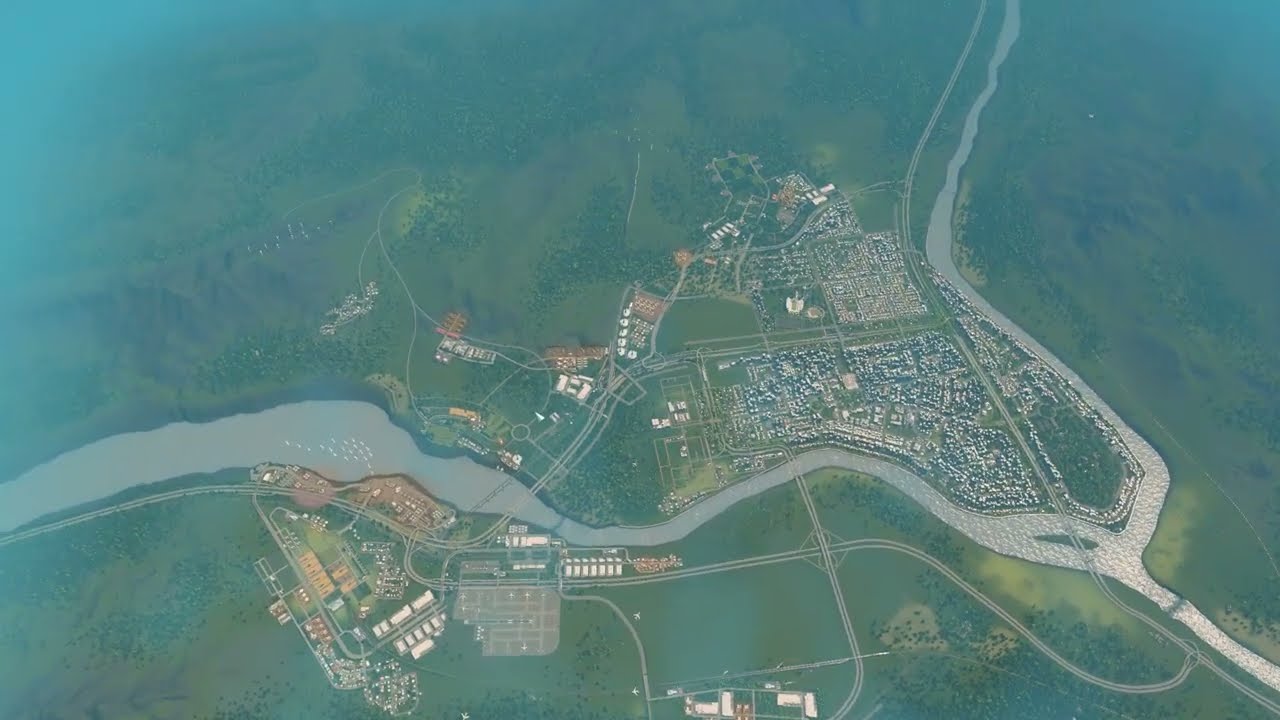
This is the third recording of this episode: I lost two sessions to missing sound. A road with a bus lane finally fixes a troublesome bus stop. The Moorpark-to-Barlow transition is filled in. On a viewer's suggestion, generic industry zoning with a forestry specialisation is mixed into Ramasaki Industry, more log yards spread the traffic, and a tree line shields the workers' barracks from the highway. The service area moves away from polluted soil, four water treatment plants become one eco-advanced plant, and a dirt road gives trucks a back route.
What happens in this episode
This is the third recording of this episode. The first take didn’t turn out the way I wanted, and the next two sessions were recorded without sound, which I only noticed the next morning. At least I had a good plan by then.
How it was built
A real bus lane
The bus stop that troubled Episode 26 still bothered me. Two buses queueing blocked everything, and two car lanes didn’t help. So I switch to a road with a dedicated bus lane. The stops survived the swap, and buses get the room they need.
The transition
I fill the empty lots between Moorpark, the older district, and Barlow, with a commercial strip and more residential. Madison Park has to grow into a bigger community for the transition to work, so it gets a bit denser here and sparser further out.
Forestry zoning
A longtime viewer suggested adding standard industry to the forestry district. It looks far more natural, so a new industrial district gets generic zoning with a forestry specialisation, which doesn’t pollute. Three more log yards go in, because they always fill up, and moving some of them spreads the trucks. With the line tool and wider spacing, a row of trees shields the workers’ barracks from highway noise.
A cleaner service area
The old service area polluted the soil, mostly through its recycling centres. I move it:
- four inland water treatment plants become one eco-advanced inland water treatment plant, with pollution at about 7, which is almost nothing;
- four power plants move to the other side of the new area;
- the park maintenance building moves onto the collector road; road maintenance can sit anywhere.
The post sorting facility still needs a better spot. A dirt road gives trucks a quiet back route to the highway. Once the soil recovers, the land will become housing.
What’s next
Ramasaki Industry is producing positive revenue. Next comes a large nature reserve with low-rise mixed housing nearby. Cities: Skylines II arrives in October, and I’ll switch over fully then with more tutorials.
Video chapters
- 00:00Third take, and a bus lane
- 04:08Filling the transition
- 08:29Forestry zoning and more log yards
- 12:49Moving the service area
- 17:04Eco water treatment, almost no pollution
- 21:29Fire, police and what's next
Clicking a chapter starts the video above at that point.
FAQ
How do you fix a bus stop that blocks traffic?
Use a road with a dedicated bus lane, so buses stop in their own lane and cars can pass. Two car lanes alone didn't help here.
Can generic industry fit in a forestry district?
Yes. Paint an industrial district, zone generic industry and set the forestry specialisation. It looks more natural and forestry doesn't pollute.
Why use the eco-advanced inland water treatment plant?
It replaces several standard plants and drops pollution to almost nothing, which frees the land around it for housing later.