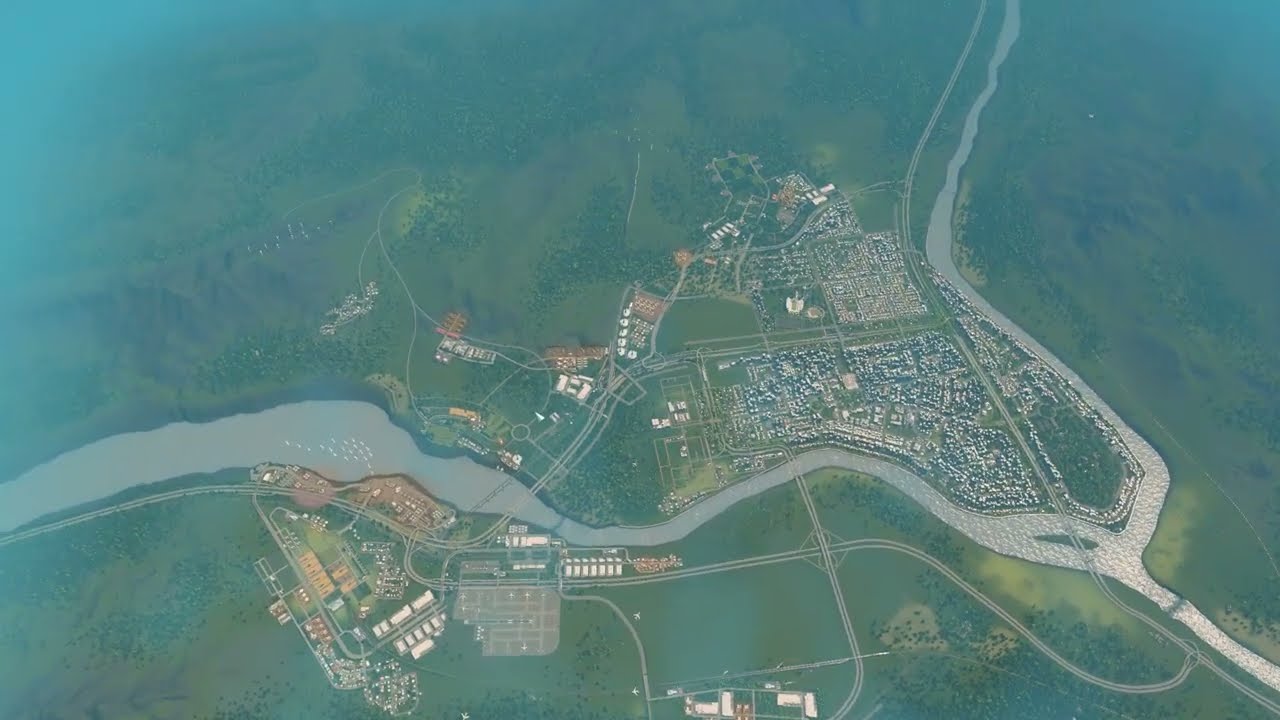
The relocated farm in Springvalley produces truck after truck, and the jam reaches back into the city. This special episode is pure traffic repair: a second on and off ramp, a downgraded highway section with dedicated lanes, industrial roads, overpasses instead of level crossings, pedestrian bans and give-way signs at every junction, services moved inland and misplaced silos and pastures deleted. It gets better, not perfect, and the farm area turns out to be simply too big.
What happens in this episode
At the end of Episode 19 the moved farm was beautiful, but it didn’t work: trucks lined up everywhere, and the jam reached back into the city. My mistake was the organisation of the area. Incoming trucks should have reached warehouses and silos right at the entrance, but instead they crossed the whole district. So this episode is a special: no new districts, just untangling one industry area. I speed up the building and explain each step in between.
Sometimes it’s worth admitting that what you built doesn’t work and taking a new approach.
How it was built
A second ramp
There was only one on and off ramp, which I had planned on purpose. Now I add a second on and off ramp, downgrade that stretch of highway and set dedicated lanes with TM:PE. Roads in the farm become industrial roads. A one-way that made no sense becomes a two-way road.
Finding the source of the jam
I follow individual vehicles to see where they go. Many post vans and cash transports drive through the farm. I also consider moving the flour mill so trucks don’t cross the area with raw materials. Storage should sit in one place.
Overpasses, no pedestrians, no lights
Level crossings are replaced with overpasses, adjusted with Move It. At every remaining junction I:
- ban pedestrian crossings;
- remove the traffic lights;
- add give-way signs, so traffic leaving the roundabout keeps moving.
Services moved inland
The water treatment plant moves inland, and a second recycling centre goes into a small new service area. The flour mill still pollutes, but that can’t be helped.
Micromanaging lanes
Industrial roads come with their own struggles. On one three-lane section there was no node where trucks could switch lanes, so I used Node Controller to give them room. It’s a little sad how much micromanaging this takes.
Fewer silos, fewer pastures
I delete misplaced silos (there are enough) and some animal pastures, which only added trucks. I straighten a road and try one last idea that frees up the roundabout. It took away a lot of traffic.
The verdict
It’s better, not solved. The farm is probably just too big, and it likely needs a second cargo station once I can buy the next tile. While I’m happily earning about 40,000 a week, I’d love some advice from Biffa here. Every comment helps, because I’m still learning.
Video chapters
- 00:00Recap: the farm is jammed
- 05:33A second on and off ramp
- 10:21Overpasses and one-way directions
- 14:55No pedestrians, no traffic lights
- 19:50Give-way signs after the roundabout
- 23:59Moving water and recycling inland
- 28:21Dirt roads and two-way roads
- 32:23Lane changes with Node Controller
- 37:15Deleting silos and pastures
- 41:47One last idea
Clicking a chapter starts the video above at that point.
FAQ
Why does a big farm area cause so much traffic?
Every field, silo, mill and warehouse sends and receives trucks. If storage, processing and the cargo station are spread out, trucks drive back and forth across the area all day.
How do you stop trucks waiting at industrial junctions?
Ban pedestrian crossings at the junction, remove the traffic lights and give the main flow priority with give-way signs on the side roads. Overpasses remove the conflict completely.
Are industrial roads better than normal roads?
They look right and suit the area, but they bring their own quirks. In this episode I wasn't fully convinced and used normal roads with Node Controller where trucks needed to change lanes.