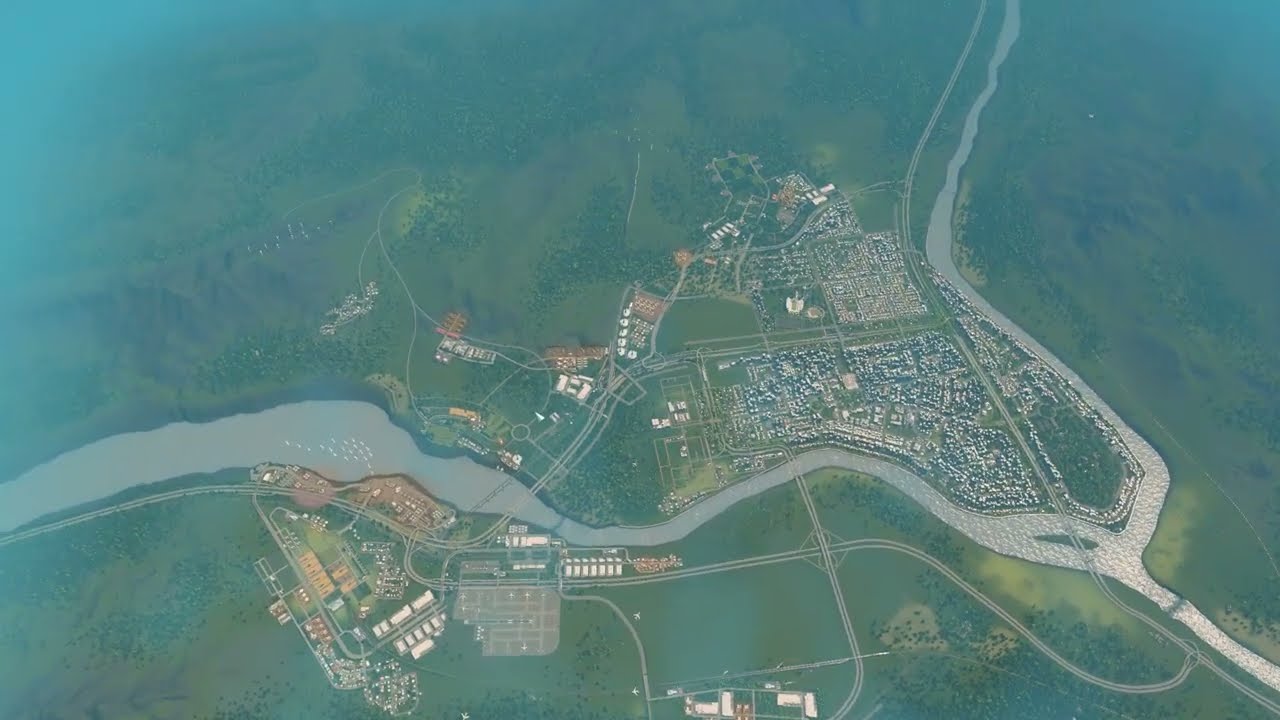
After fixing a badly built interchange, Springvalley moves its five-star farming industry out of downtown. I extend the industry area to the new site first so it keeps its level. Then a cargo train station, the main farm building, large fields, silos, barns, workers' barracks and warehouses go in before the old farm is deleted. A small farm-worker village with local produce shops follows, and the truck traffic around the silos becomes the worst I've ever had to manage. The city passes 50,000.
What happens in this episode
Episode 18 broke up the grid with an organic downtown. Afterwards I noticed one interchange wasn’t built properly: some ramps were missing and a node sat too close to the highway entrance. Then comes the main job: moving the farm out of downtown.
How it was built
Fixing the ramps
I move the node in and smooth the slopes with Node Controller and Move It. Lane management has to be redone, because moving nodes loses the settings. Every ramp gets a dedicated lane, and the traffic lights that appeared are removed.
Keeping five stars
Here’s the technique: extend the existing industry area to the new site first, so the farm keeps its five-star level. Then come a simple ramp off the highway, a national road, and dirt roads for planning along the train line. A cargo train station sits on a short rail link. I admit that moving the main farm building like this is cheating a bit, but I’m happy to pay for it.
The new farm
This time the farm gets large crop fields: fewer potatoes (I hate potatoes), plus cotton, wheat and orchards. Silos, small barns (they look beautiful), workers’ barracks, a warehouse and a bakery go in, and water, power and an advanced water treatment plant are connected. Then I delete the old farm buildings and shrink the industry area to the new site. The agricultural area moved with its five stars and gets new policies: improved logistics, work safety and advanced automation. More barracks extend the power network, and the main roads become industrial roads.
The silo problem
The large grain silos sat in terrible spots and trucks piled up around them, so I moved them. Waste goes to a recycling centre rather than a polluting option.
A farm-worker village
A small grid of low-income homes goes in near the farm, with:
- a local produce shopping district (I accidentally made it a tourism district first);
- a doctor’s office, because farmers can get badly hurt;
- a graveyard, which fits better in the countryside;
- a sauna and a community school.
One district had the wrong specialisation and produced garments until I fixed it.
More fields and warehouses
Another grid gets pastures, a second flour mill and a second rail connection. Big warehouses on two-lane one-way industrial roads store the farm products. Then came the worst traffic management I’ve ever done: I banned pedestrians, built four-lane roads, reversed one-ways and consolidated the silos. Springvalley passed 50,000. The old industrial area stays empty for now, maybe for lower-density housing later.
The traffic isn’t fixed yet. Episode 20 is all about that.
Video chapters
- 00:00Fixing the interchange ramps
- 05:22Keeping five stars while moving
- 11:00A cargo station and the new farm layout
- 16:31Large fields, silos and barns
- 22:03Warehouses, water and the old farm deleted
- 27:18Five-star policies and industrial roads
- 32:34Silos in the wrong place
- 37:47A farm-worker village
- 43:33More fields and a second rail link
- 48:55One-way warehouse roads
- 1:00:41The worst traffic management ever
Clicking a chapter starts the video above at that point.
FAQ
How do you move an industry area without losing its level?
Extend the existing industry area to the new location first, so it is still one area. Build the new buildings there, then delete the old ones and shrink the area. The level stays.
Why do silos cause truck jams?
Large grain silos attract lots of trucks. If they sit at a busy junction, they block everything. Move them to roads where trucks can pull in without stopping through traffic.
Should farm areas have a cargo train station?
A cargo station inside the farm area becomes a major outgoing connection and keeps trucks off city roads.