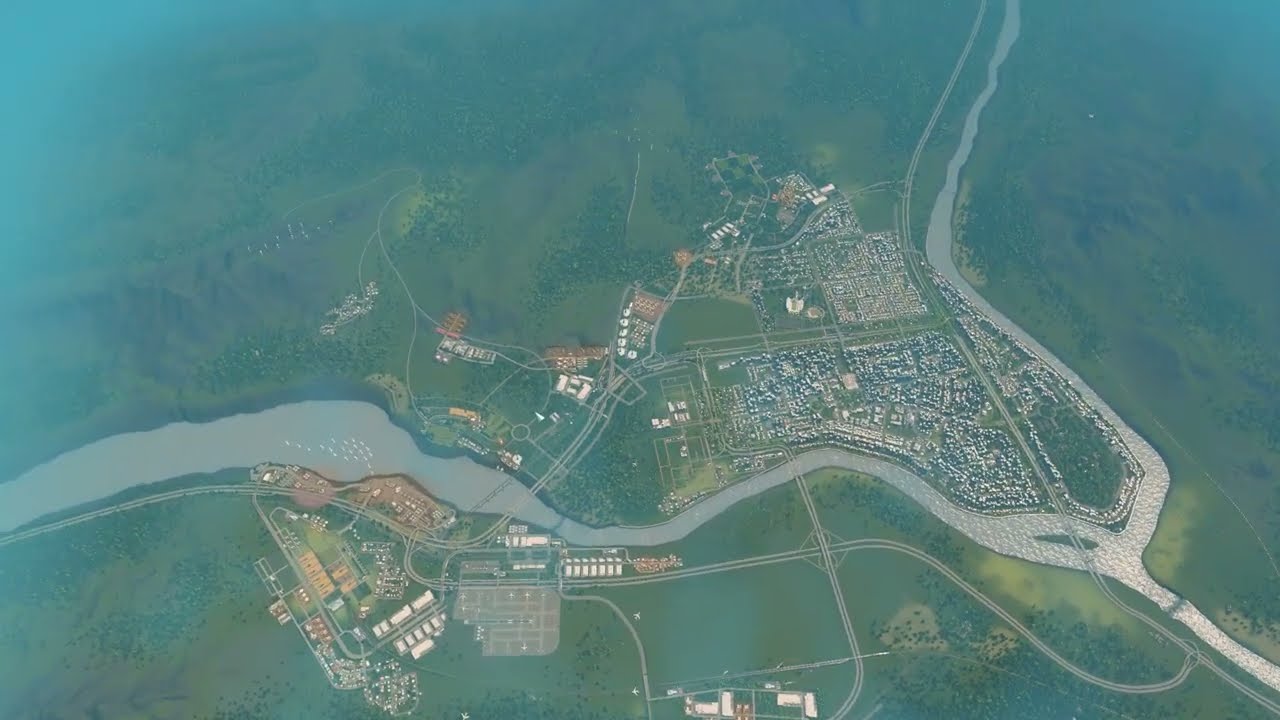
A strange glitch — hidden roads deep underground that looked like an earthquake — opens the episode. Then Springvalley finishes its four parks with gazebos and plazas, builds a farm-worker community without schools, adds Pearl Hills farmland and a forestry area, fixes a disconnected industrial grid, reaches Busy Town, and starts de-zoning blocks to make room for the highway connection.
What happens in this episode
Right at the start, a glitch I’d never seen: the ground looked as if an earthquake had hit, but there was no earthquake. After three or four reloads it turned out to be stray roads deep underground. Last episode I also missed a burning field. The fire department here seems a bit slow. I’m still hesitant to start the highway rebuild because it might hurt the income, so parks come first.
How it was built
Parks
A bridge in the main park blocked building on both sides, so the path is rebuilt on the ground, with a beautiful rock moved away and put back. Fences stop people cutting across. Spring allergies, by the way, make this the worst time of year for me. Gazebos unlocked and are perfect small fillers. A plaza raised the entertainment level. Oak Park, the garden, Evergreen Grounds and Manor City Park are all finished, and now just need visitors.
Farm workers and traffic
At almost 4,000 citizens, traffic piled up. A service road and a shortcut split it. The farm workers’ homes get no schools, because the farm needs uneducated workers. Elder care and child care centres went in. Industrial demand rose again, so the forestry area gets started.
Missing connections
A whole area wasn’t connected to the power grid, and nobody complained. The agricultural area reached level 2 and turns a profit, and a factory next to the farm was removed. Coming back to the game after so long, you remember a lot but not everything. New farmland, Pearl Hills, gets a juice press, profits of 5,000–6,000, more recycling and sewage capacity. Springvalley reached Busy Town.
Clearing room for the highway
Pedestrian crossings on a busy road came out, and priority signs cleared a jam, but the highway can’t wait any longer. De-zoning begins to make room for ramps. Traffic flow was at 83%.
A plan for the map
The resource map shows oil and ore. Long-term, one area will become a huge downtown, with farms elsewhere, maybe an airport strip, and a large nature reserve to keep the city as green as possible. Riverrun is one of those maps I really like, because the landscape is beautiful.
Video chapters
- 00:00An 'earthquake' that wasn't
- 04:43Rebuilding a park path without a bridge
- 08:43Gazebos and plazas for park levels
- 13:14Four parks finished, traffic piling up
- 18:19Elder and child care, forestry start
- 23:33A disconnected grid and Pearl Hills
- 33:32Sewage, recycling and Busy Town
- 42:24De-zoning for the highway
- 46:49Recap and a map plan
Clicking a chapter starts the video above at that point.
FAQ
How do you level up a park in Cities: Skylines?
Add enough entertainment (cafés, restrooms, gazebos, plazas) and wait for the required number of visitors. Gazebos are great fillers because they're small.
Should farm workers get schools?
Not too many. Farms need uneducated workers, so a small farming community near the fields is better without its own schools.
Why did my ground look like an earthquake hit?
In Springvalley it was a set of stray roads deep underground. Reloading didn't help — removing the hidden roads did.