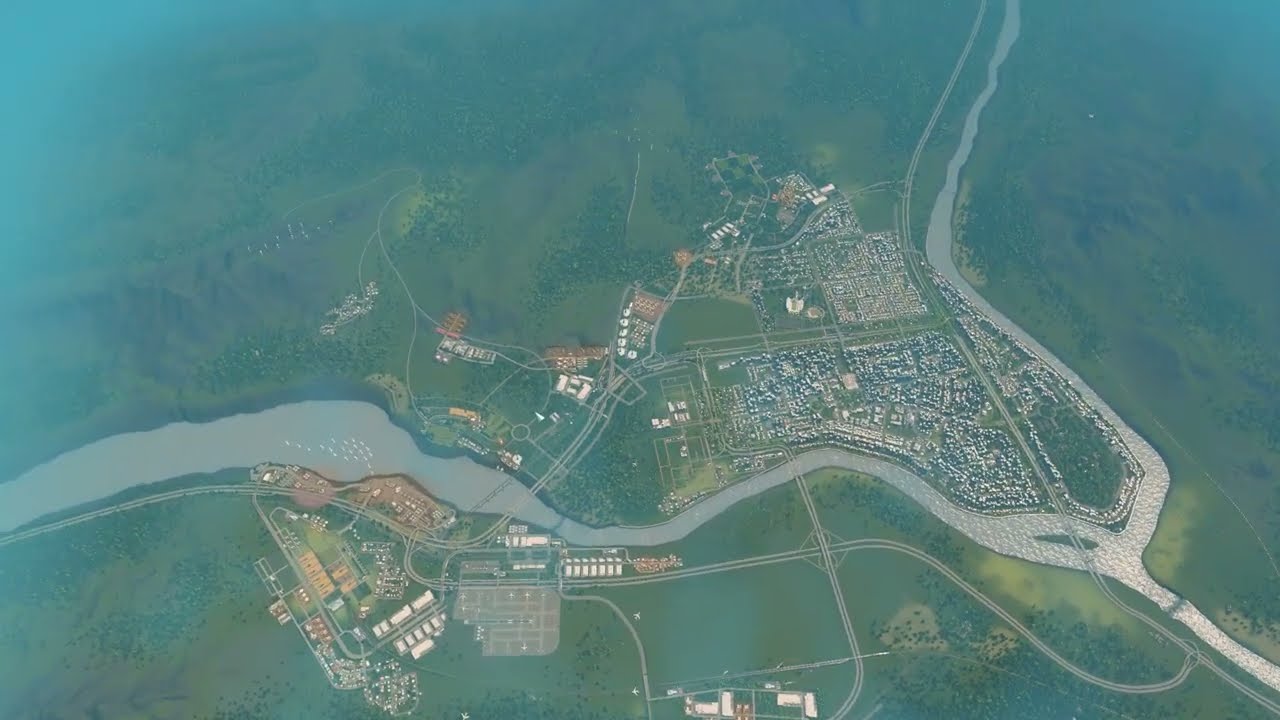
I start by being transparent about two beginner mistakes — an overpass stuck to the grid and blocks that will have to go for future highway ramps. Then Springvalley checks its resource map, reserves forest and farmland, builds a corn farm that turns a profit almost immediately, places worker homes near it, removes the first industrial blocks, and adds a landfill, high school, healthcare and fire coverage.
What happens in this episode
I want to be transparent: episode 1 had a couple of beginner mistakes. The overpass for the future highway sticks to the grid instead of following the terrain, so it will need rebuilding. And some blocks will have to go to make room for proper on- and off-ramps later. For now the town can’t afford to lose citizens or businesses, so the first step is a steady income.
How it was built
The resource map
Before placing industry, check the natural resources map. A forest area is reserved for future forestry, and fertile land becomes the farm. A classic mistake: districts painted in the wrong spot had to be removed and redrawn once the road network showed the resources properly.
A profitable corn farm
At 15,000 the main farm building goes in the centre, which is more realistic. Silos, crop and fruit fields and animal pastures come with it. I love corn fields, because they make the landscape look beautiful, and wheat comes later. The farm turned a profit almost immediately. Industrial demand dropped right away, so the first industrial buildings could go. The pollution takes a while to fade.
Workers close by
Something I learned recently: it makes sense to put homes for uneducated workers close to the farm. A landfill is the cheaper option for now, though I really don’t like landfills.
Collectors and services
Dale Road and Ashton Way will become main collector roads. A police station goes one square back from the main road so it can be widened later without moving anything. A high school, healthcare (average health was 65%) and fire stations for the town and the industry followed. Empty squares are left between blocks for future parks and schools.
Next: highways
Springvalley is profitable, and highways and national roads are now unlocked. Next episode, I’ll plan the highway connection with a new road planning tool. This is probably my last city in this game before Cities: Skylines II.
Video chapters
- 00:00Two beginner mistakes
- 03:30Checking the natural resources map
- 07:07Reserving farm and forest districts
- 11:10A corn farm in profit
- 18:25Worker homes next to the farm
- 22:42Collector roads and setbacks
- 26:09High school, healthcare and fire
- 33:27Wrap-up: highways unlocked
Clicking a chapter starts the video above at that point.
FAQ
How do you find farmland in Cities: Skylines?
Open the natural resources map. Fertile land, forest, ore and oil are shown there — place your industry areas on top of the right resource.
Do farms make money quickly?
In Springvalley a small corn farm started turning a profit almost as soon as it was placed.
Why leave space next to main roads?
So the road can be widened later without demolishing services — I place police stations and schools one square back from future collector roads.