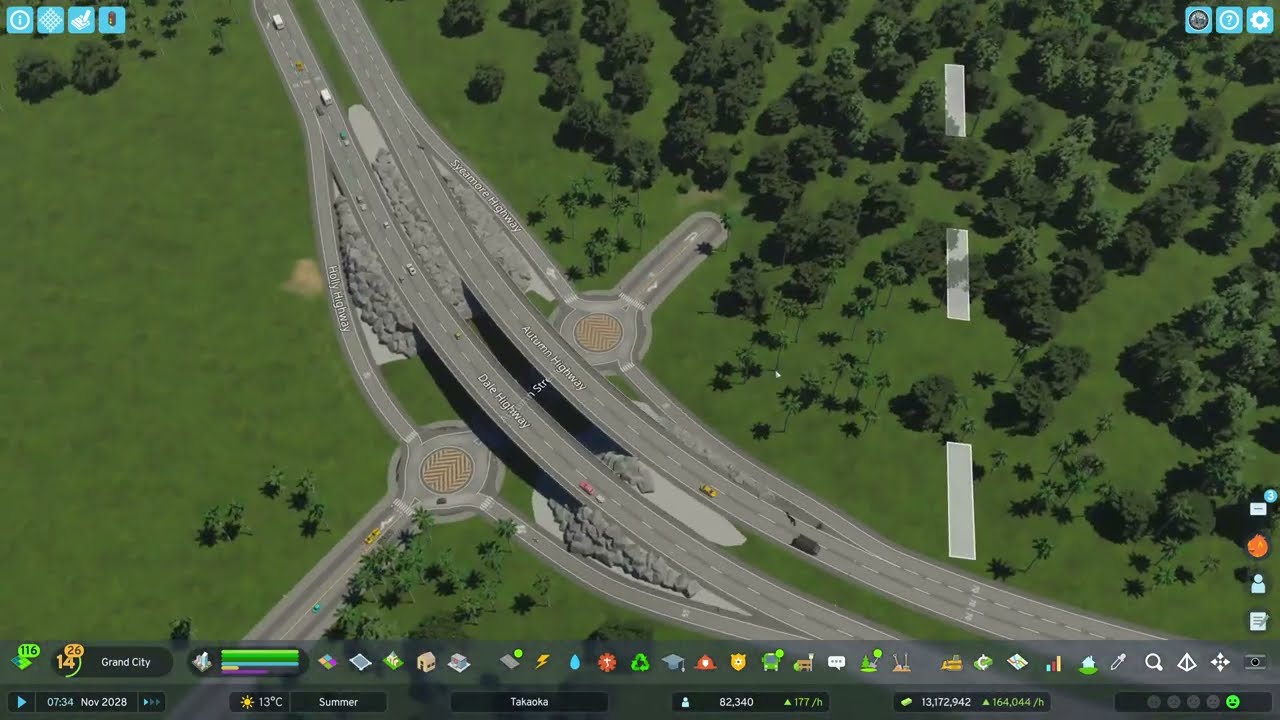
The production panel shows a grain and vegetable shortage, so Takaoka buys nine tiles of fertile land for a remote farming area with small farms, trees in the fields and a tiny rural village with basic services. Most farms stay empty — not enough uneducated workers live nearby — until low-rent housing and a bus line arrive, and the buses run at 95% capacity.
What happens in this episode
The anniversary update brought a lot more traffic to many cities, mine included, and other YouTubers saw the same. Episode 19 leaves the beach district of Takaoka behind for something different. The production panel in the economy view shows the island is short of grain and vegetables (carrots especially), with a big surplus of cotton.
How it was built
Nine tiles of farmland
Nine tiles cost around 4.6 million, not a problem at this point. The resource view, filtered to fertile land, shows where the farms should go. The layout uses tiny rural roads with many small farms instead of a few big ones, mostly grain and then vegetables, with a chicken farm and livestock. One farm needed a bit of land in an unpurchased tile, which I cheated with Anarchy. Small pieces of land are left for settlements.
Trees in the fields
Bushes and trees go between and inside the fields with the advanced Line Tool, like you see in many European farm landscapes.
A tiny rural village
A small settlement at the entrance to the area is meant to feel cozy and undeveloped, maybe interesting for tourists one day. The houses are placed by hand, no bigger than 2×3 and mostly 2×2, with gaps in between. Small Chinese-pack houses filtered in Find It look almost Japanese. North American houses fill the rest. Services stay minimal: one elementary school, one fire station, one police station, a small clinic and a few shops. A helicopter base covers fires, and a crematorium goes in as well.
Why don’t the farms produce?
Even after a while the huge farmland produced almost nothing. The farm buildings were “empty, available for rent”. Only two farms had enough employees. The problem: not enough uneducated workers lived nearby. The fix was low-rent housing, including two of the new Imperial Heights apartments, one with parking and one without. They filled up quickly with farm workers, and the vegetable deficit started to shrink. The rent status kept flipping back and forth in a way that looked like a game bug.
Traffic and buses
With no proper road connection, people faced long commutes, and an accident blocked the only road. Taxis turned around, and the police took a while to clear it. A gas station and a new bus line helped. The buses ran at around 95% usage, so the line needed more vehicles. The farmland doesn’t blend into the landscape as well as I’d like yet. I’m not a farming-build specialist, but I like both the farms and the little village.
Video chapters
- 00:00Anniversary update traffic and a grain shortage
- 04:08Small farms on gravel roads
- 08:42Tiny houses, placed by hand
- 13:49Trees inside the fields
- 18:56A rural village with basic services
- 28:37Why aren't the farms producing?
- 40:53No workers: low-rent housing
- 53:46An accident, buses at 95%
Clicking a chapter starts the video above at that point.
FAQ
Why are my farms empty in Cities: Skylines 2?
Usually a lack of workers — farms need uneducated or low-educated people living nearby. In Takaoka only two farms had enough employees until low-rent housing went in close to the fields.
How do you find what your city is short of?
Open the production panel in the finances/economy view. It shows surplus and deficit per resource — here grain and vegetables were short while cotton was in big surplus.
How do you keep a farming area realistic?
Use many small farms instead of a few huge ones, narrow rural roads, trees and bushes inside the fields as you see in Europe, and a small village with only the basic services.