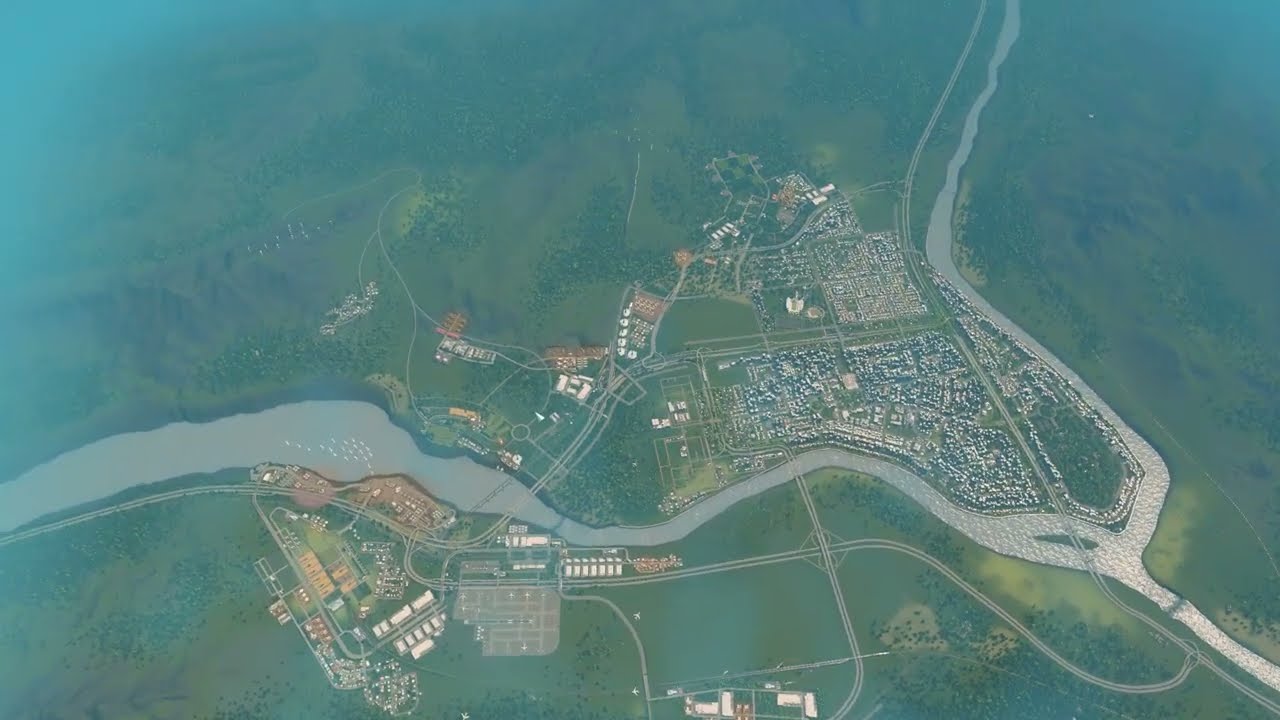
Springvalley's new central station gets what stations usually have around them: offices, placed in patches for variety. Trees shield homes from train noise, and curbside parking near the stadiums is banned so cars use the lot. The stadium stop turned out to be a sunken metro station, so it's replaced by a proper ground-level train station. The old blocks are rezoned for high-density residential and commercial, four-lane roads and moved bus stops fix a jam, and a tall monument with a view over both stadiums crowns the entertainment district.
What happens in this episode
The central station from Episode 36 still looks rough. Where I come from, there are usually lots of offices next to the train station, so that’s the starting point. People are already transferring from the main station to the monorail: 260 passengers last week.
How it was built
Offices in patches
I place offices in patches instead of a full strip, because variation looks more natural. A few cars still flew over a phantom overpass, a leftover glitch.
Noise and parking
Train stations are loud. In a previous city I learned that the hard way. So medium-sized trees shield homes and offices from the tracks. Cars were parking along main roads and next to the monorail. Curbside parking near the football and baseball stadiums is banned in TM:PE, so people use the lot, and they do. A standard pathway makes a shortcut to the station.
The wrong station
The stadium stop had served zero passengers. It was a sunken metro station, not a train station. I replaced it with a ground-level station on two lines with its own parking lot, and removed some rocks. Taxi stands go in, and trains run through.
Going high-density
The old low-rise blocks are rezoned for high-density residential, with high-rise commercial in between. The city is temporarily losing about 550 people a week and revenue is thin, so the budget needs work. More monorail stations along the main arterials would look good and take pressure off. The train station brings in many tourists.
A jam that kept growing
Near the station it got worse instead of better. The fixes:
- upgrade two-lane roads to four lanes. It doesn’t look as nice, but it works;
- move two bus stops so buses stop queueing;
- add priority signs, dedicated turn lanes and parking bans on crucial segments.
I’m not a fan of micromanaging, but sometimes it’s needed. The new high-density homes explain the sudden traffic.
A monument
The standard path now links straight to the station and the baseball stadium. I place my first historical monument, a tall tower where you could watch either stadium’s game from above. Hotels fill in around it. A medical clinic and a small police station complete the entertainment district. Some visitors turn around because their routes were set before the new path existed. An intercity bus station might follow somewhere.
Video chapters
- 00:00Offices around the station
- 04:24Noise barriers and parking bans
- 09:07The stadium stop was a metro station
- 13:42A ground-level train station
- 17:42Taxis and high-density zoning
- 21:56High-rise commercial and a monorail stop
- 26:21Monorail along the arterials
- 30:27Tourists arrive by train
- 34:40A jam that keeps getting worse
- 38:48Four-lane roads and moved bus stops
- 43:45A path to the station
- 47:49A monument over the stadiums
- 52:24Services and the crowds
- 56:35Recap
Clicking a chapter starts the video above at that point.
FAQ
Why put offices next to a train station?
Commuters arrive there, so offices nearby give the station a reason to be busy and give residents somewhere to work. Patch them in rather than one long strip for variety.
How do you stop cars parking on main roads?
In TM:PE, disable parking on the segments around stadiums and busy collectors, so drivers use the dedicated parking lot instead.
Why does a new station sometimes get no passengers?
Check the station type. Here a sunken metro station had been placed instead of a train station, so trains never stopped there.