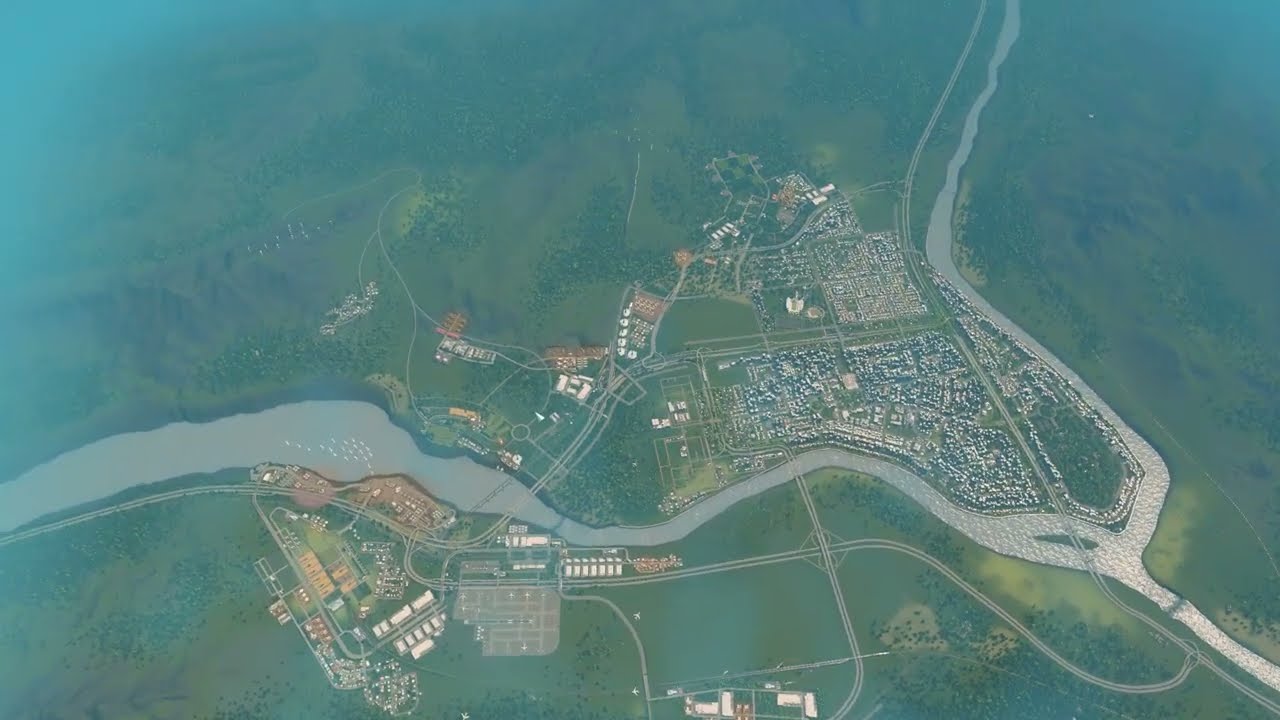
The bare-bones cargo airport becomes a proper hub. I add new local connections, fix a missing power link, warehouses set to balanced, an airport fence, smoother ramps, test slip lanes and big emergency services. Two bridges are levelled to match. Next to it, the new Hemlock Park district gets Springvalley's first generic polluting industry, with Industry 4.0 and print shops. The terrain around the airport is softened, a toll booth earning 72 a week is demolished, and parking is banned under the bridges.
What happens in this episode
The cargo airport from Episode 32 was very basic. There isn’t much traffic yet, but once the industries grow that will change, so this episode is about making it future-proof. Springvalley has almost 70,000 citizens, a big downtown and the new peninsula with its riverside park.
How it was built
Connections and power
Two new local connections go in, plus a direct link to the hub, and the rail line no longer crosses the industrial road. A missing power connection surprised me. Warehouses set to balanced pull trucks from all over, even from Ramasaki Industry, to drop goods off. It should calm down. No pedestrians, no traffic lights and no U-turns.
Airport fence and ramps
This is the first time I’ve used an airport fence, and it looks really nice. A wonky node at a bridge-to-ground transition was rebuilt with a three-lane highway with sound barriers. A ramp slope was smoothed. A detour road close to the runway turned out to be unused, so I deleted it.
Services and slip lanes
The hub gets a hospital, a police station and a fire station, all large ones, because you never know what happens near an airport. I test rough slip lanes: trial and error, as many city builders work. A two-lane then three-lane section gets proper lane connections. Taylor Bridge sat far below Max Bridge, so I levelled them to look more reasonable.
Hemlock Park
A small square next to the airport becomes Hemlock Park, Springvalley’s only polluting generic industry. It’s a regular industrial district with no resources and Industry 4.0 buildings to keep the dirt low. Print shops, ready-to-wear garments and appliances move in. An industrial area next to a cargo airport makes complete sense. Pollution builds slowly, and I’ll keep watching it. I also softened the terrain, because I’d been harsh when I flattened the airport area.
Toll booth gone
The toll booth earned 72 a week, so I demolished it and smoothed the road with the curve tool. The main crossing from the shoreline episodes now flows well.
No parking under bridges
TM:PE showed parking allowed under the bridges, so I set no parking there. The hub is coming together: all highways are connected and everything works.
Video chapters
- 00:00Making the cargo airport future-proof
- 08:49Power, warehouses and balanced storage
- 13:13Airport fence and a wonky node
- 17:14Big services and test slip lanes
- 21:18Lane math and levelled bridges
- 25:32Hemlock Park industry district
- 29:44Softening the terrain, demolishing the toll
- 34:04No parking under bridges
Clicking a chapter starts the video above at that point.
FAQ
Why do warehouses set to balanced attract so many trucks?
Balanced warehouses both fill and empty, so trucks arrive from every industry to drop goods off. The rush slows down once the warehouses reach their level.
Where should polluting industry go?
Next to transport like a cargo airport and away from homes. Keep the district small and watch the pollution overlay as it grows.
How do you test a new slip lane?
Build a rough version, watch for a few minutes whether anyone uses it, and delete it if nobody does.